



Mozambique
In Mozambique, journalists step up effort to combat false information


With the spread of false information on social media, journalists in Mozambique are on the front line in the fight against mis-and disinformation. Amarilis Gule has the report from Maputo.
VOA60: Mozambique opposition leader denounces top court’s election victory ruling, and more
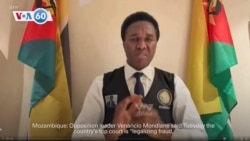
Mozambique opposition leader Venancio Mondlane said Tuesday the country's top court is “legalizing fraud, legalizing the humiliation of its own people” after the court upheld the election win by the ruling Frelimo party Monday. The Constitutional Court ruled that irregularities “did not substantially influence the results.” And the Kenya Wildlife Service announced plans to partner with the BioRescue Consortium to use advanced reproductive techniques to save the critically endangered white rhino - the only two remaining females live at Kenya's Ol Pejeta Conservancy. These, and more Africa-related news updates on today’s VOA 60.
Groups in Mozambique call for dialogue to ease ongoing political unrest
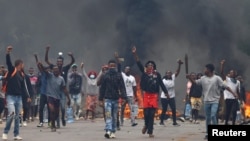
VOA 60: Mozambique police patrol Maputo in wake of election dispute violence, and more
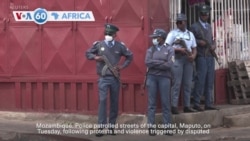
Mozambican police patrolled streets of the capital, Maputo, on Tuesday, following protests and violence triggered by disputed election results. The U.S. government on Monday condemned the weekend killings by gunmen of two opposition figures, with Washington urging "a swift and thorough investigation into the murders." Taiwan has again rejected South Africa’s demand to move its representative office from the country's capital, Pretoria, to the commercial center of Johannesburg, Foreign Ministry spokesperson Jeff Liu said Tuesday. He blamed pressure from Beijing for the decision. These, and more Africa-related news updates on today’s VOA 60.
Analyst skeptical about Mozambique’s election result as Election Commission expresses readiness

The Center for Democracy and Human Rights in Mozambique has expressed skepticism over the legitimacy of the country’s presidential and legislative elections to be held on Wednesday October, 9. Its director Adriano Nuvunga told VOA in Maputo that the National Commission of Election for Mozambique is unlikely to deliver on the will of the people. President of the National Commission of Election for Mozambique Carlos Matsinhe admits that despite every election posing its own setbacks, the Commission is ready for a peaceful civic exercise across the country. Close to 17 million Mozambicans are expected to head to the polls Wednesday to vote for a candidate who will succeed departing President Filipe Nyusi who has served two terms in office. VOA’s Mariama Diallo spoke to Nuvunga and Matsinhe in this interview.
Mozambique voters prepare to go to the polls to elect a new president and legislature
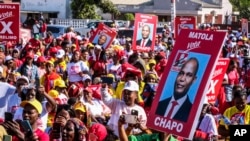
Mozambican president Nyusi opens Zimbabwe agriculture show in Harare

Mozambican president Filipe Nyusi on Tuesday joined his Zimbabwean counterpart Emmerson Mnangagwa to officially open the Zimbabwe agricultural show in Harare. Nyusi called on Zimbabweans to invest in his country while expressing gratitude to the Zimbabwean leader and his people for their support to fight against terrorism in the north of Mozambique’s Cabo Delgado Province. “I am proud of what we have achieved together,” Nyusi said. Mnangagwa later told the press in an interview that President Nyusi is in his country to also see how Zimbabweans have been working to ensure food security. “He (Filipe Nyusi) admired what our people are doing in agriculture,” he said.
Young Innovators aim to put Mozambique on path to tech development

In Mozambique, two young innovators are using recycled resources to improve lives in their community. Amarilis Gule has the report from Maputo.
Anti-graft activist praises US conviction of former Mozambique finance minister

Al-Shabab used young boys in Mozambique attack, human rights group says

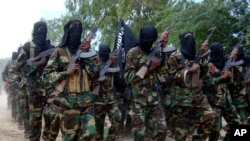
Human Rights Watch, an international advocacy group, on Wednesday released a report which said al-Shabab, an Islamist militant group with operations in Mozambique, used child soldiers to attack a town in the nation’s conflict-stricken northern region.
HRW, with support from residents of Mozambique’s conflict-stricken Cabo Delgado province, said the attack on Macomia, a city in the nation’s northern region, was carried out last week by boys as young as 13.
Residents who were forced to flee the fighting recognized some of the child soldiers as their missing relatives, the advocacy group added.
Al-Shabab, which is affiliated to the Islamic State group, has previously been accused by U.N. agencies of kidnapping children and using them as soldiers in its insurgency in Cabo Delgado, which began in 2017.
A surge of attacks by insurgents in March left at least 70 children missing, according to local authorities and a group of aid agencies.
Witnesses told HRW that dozens of child soldiers were seen carrying AK-style assault rifles and ammunition belts during the attack.
Abu Rachide, a resident of Macomia, told HRW that he recognized his 13-year-old nephew among other children.
"I saw him with my own eyes," Rachide said, adding that the boy waved at him as he marched on to complete his mission.
Rachide’s sister said the boy, who went missing earlier in the year, appeared to be taking instructions from older fighters.
"I kept wondering how he became a fighter like that in just four months," she told HRW.
In an interview with VOA, Zenaida Machado, a representative of HRW said residents who spoke to the advocacy group identified the perpetrators to be below 17 years old.
By world standards the attacks on Macomia constituted to be a war crime, Machado said.
"The information on humanitarian law is very clear about that. If you use children under 15 in conflict, that is a war crime," she said.
Mozambican media, HRW and other aid groups with operations in Macomia reported that the attacks on the northern town started on May 10 and lasted a day.
Islamist fighters looted shops and warehouses for food and exchanged fire with Mozambican and South African soldiers before retreating, reports say.
At least 10 people, mostly soldiers, were reportedly killed in the latest fighting and about 700 residents fled to nearby forests to escape the attacks, according to HRW’s report.
VOA’s Carol Van Dam contributed to this report. Some information was sourced from Associated Press.
Daniel Chapo is selected as the ruling party’s presidential candidate in the Mozambique election
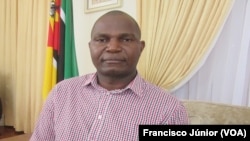
Mozambique's president says northern town under Islamist attack

MAPUTO — Mozambique's army is fighting Islamist insurgents who launched a major attack on the northern town of Macomia on Friday morning, President Filipe Nyusi said in a televised address.
The town is in Cabo Delgado, a gas-rich northern province where Islamic State-linked militants launched an insurgency in 2017. Despite a large security response, there has been a surge in attacks since January this year.
Two security sources told Reuters that hundreds of fighters are believed to be involved in the latest attack.
"Macomia is under attack since this morning. Fire exchange still continues," Nyusi said at around 1000 GMT, adding that the militants initially withdrew after about 45 minutes of fighting, but then regrouped and came back.
Friday's attack appeared to be the most serious militant attack in the area in some time.
A regional force from the Southern African Development Community (SADC), which deployed in Mozambique in 2021, started withdrawing last month as its mandate ends in July.
Piers Pigou, head of Southern Africa Programme at the Institute for Security Studies, said the attack on the Macomia district headquarters validates concerns over a security vacuum opening up with the drawdown of the southern African troops.
"Claims that the province has been for the most part stabilized are evidently not accurate," he told Reuters.
Nyusi said that attacks can take place in such periods of transition, and that he hoped the SADC forces would be able to step in and help. It was unclear if they were still deployed in the area or involved in the fight.
Rwanda has also deployed troops to Mozambique to help fight the insurgency.
Figures released by the International Organization for Migration in March show over 110,000 people displaced since the end of last year, amid escalating violence in the province.
The offensive comes as French oil company TotalEnergies TTEF.PA is seeking to restart a $20 billion liquefied natural gas terminal in Cabo Delgado that was halted in 2021 due to the insurgency. That project is some 200 kilometers (124 miles) north of Macomia, the town under attack.
ExxonMobil, with partner Eni, is also developing an LNG project in northern Mozambique and said last week that it was "optimistic and pushing forward" as the security situation had improved.

100 People Died After Ferry Boat Sank in Mozambique, President Says
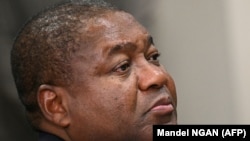
Mozambique’s President Filipe Nyusi, late Monday said over 100 people died after a ferry boat sank off the northern coast of his nation, and almost 20 others were still missing.
A statement released by Nyusi’s office was an update from earlier reports by officials who had placed the death toll at 98.
President Nyusi was saddened by the tragedy and has directed Mozambique’s transport minister to investigate the matter, the statement said.
"The Mozambican Government will meet tomorrow to assess the situation and take necessary measures to minimize the impact of this incident," Nyusi’s office said.
An official from Mozambique’s Maritime Transport Institute, INTRASMAR, described the ferry as an overloaded fishing boat which was not licensed to transport people.
130 people were aboard the unlicensed vessel, INTRASMAR said.
Lourenco Machado, an administrator of the maritime transport institute, gave an update on state television. He said the boat was ferrying people from Lunga in Nampula province to Mozambique Island on Sunday.
Initial reports indicate that the boat was hit by a tidal wave, Machado said.
Menque Amade, a crew member who survived, spoke to national broadcaster TVM on Monday. He said, "water filled the boat... and the tragedy happened."
The Office of the Secretary of State for Nampula province released a statement on Monday which said the passengers were reportedly fleeing a cholera outbreak, adding that 10 people had been rescued while nearly 20 were still missing.
The information on the cholera outbreak was inaccurate and caused panic, according to Jaime Neto, Nampula’s secretary.
Neto said children were among the victims of the ferry sinking.
Mozambique, one of the world's poorest, has recorded almost 15,000 cases of cholera and 32 deaths since October, according to government data.
Nampula is the worst affected region, accounting for a third of all cases.
Locals say health authorities recently stepped up outreach and prevention efforts.
But the increased medical presence caused a scare among some residents, pushing a number of them to flee, they said.
In recent months, the province has also received a large influx of people fleeing a wave of jihadist attacks in its northern neighbor of Cabo Delgado.
Some information for this article was sourced from Reuters and Agence France-Presse.
Forum