



Gambia
A citizens’ group in Gambia wants foreign minister disqualified in upcoming elections


Gambia parliament rejects bill to end ban on female genital mutilation
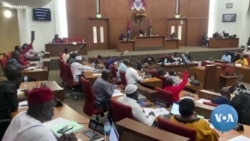
Gambia's parliament rejected Monday a bill that would have lifed a ban on female genital mutilation or FGM. Lawmakers voted down all the clauses in the proposed law, Parliament Speaker Fabakary Tombong Jatta said. For the first time in the West African nation, the bill against the ban sparked a public debate about FGM a custom dividing villages, families and parliament. Almaneh Gibba, the lawmaker who submitted the bill to Gambia's parliament, said he was upholding cultural and religious prerogatives in the Muslim-majority country where FGM is widespread and deeply rooted. Many Islamic scholars dispute his arguments. The World Health Organization says FGM has no health benefits and can lead to excessive bleeding, shock, psychological problems and even death.

Former Gambian minister found guilty of crimes against humanity by Swiss court
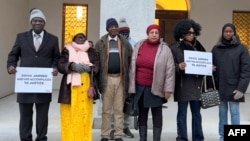
A Swiss federal court on Wednesday found a former Gambian government minister guilty of crimes against humanity under former dictator Yahya Jammeh, according to a Geneva non-governmental organization supporting the plaintiffs.
Reed Brody, a war crimes prosecutor attending the trial, said Ousman Sonko was convicted of intentional homicide, torture and false imprisonment and acquitted for rape.
The ruling, by the Swiss Federal Criminal Court in Bellinzona, can be appealed.
Sonko, Gambia's former interior minister, is the highest-ranking official ever to be tried in Europe using universal jurisdiction which allows the most serious crimes to be prosecuted anywhere.
Sonko has been in Swiss custody ever since his arrest in January 2017 after applying for asylum following his sacking from the West African nation's government.
His lawyers had argued for his acquittal during the trial in Bellinzona and demanded financial compensation for the years spent in detention.
Trial International, a non-governmental organization focused on fighting impunity for international crimes, filed the complaint leading to the arrest of the former Gambian authority.
The NGO took to social media platform X, formerly known as Twitter, to announce that Sonko "has been sentenced by the Swiss Federal Criminal Court to 20 years in prison for crimes against humanity."
Benoit Meystre, Trial's legal advisor spoke to French media outlet, Agence France-Presse, AFP, prior to Sonko's guilty verdict. He said the NGO "observed (with) great relief on the part of the complaining parties to have been present, to be able to confront Ousman Sonko and to see how he reacted to what they said."
"Some also told us that the role they played in the trial contributes to their healing, regardless of the verdict that will be rendered," Meystre added.
Jammeh, Gambia's former dictator ruled the West African nation with an iron grip from 1994 to 2016.
Sonko was accused by Swiss prosecutors of "having supported, participated in and failed to prevent systematic and generalized attacks as part of the repression carried out by the Gambian security forces against all opponents of the regime."
The charges included nine counts of crimes against humanity.
Sonko's lawyers argued that he should not be tried for crimes against humanity because the alleged offenses were isolated acts and acts for which they said he bore no responsibility.
Philippe Currat, Sonko's legal representative said, "there is no systematic nature, and the small number of victims for each episode, taken separately or in total, does not reach the threshold required to consider that it could be a generalized attack."
Furthermore, "we have demonstrated that the abuses committed against the victims are not attributable to Ousman Sonko," but instead to the National Intelligence Agency and the Junglers paramilitary group, "which have never been under his authority or under his effective control," Currat said.
Sonko’s trial took place under the principle of universal jurisdiction, which allows countries to prosecute alleged crimes against humanity, war crimes and genocide regardless of where they were committed.
His lawyers argued that he should not be tried on any counts predating 2011 when universal jurisdiction came into force in Switzerland.
Reed Brody, a member of the International Commission of Jurists who works with Jammeh's victims and who followed the Swiss trial said the outcome of the case gave "added impetus to the home-grown efforts in The Gambia to prosecute the worst crimes of the Yahya Jammeh regime, which, after long delays, are finally accelerating."
In 2022, Gambian authorities endorsed the recommendations of a commission that investigated the atrocities perpetrated during the Jammeh era.
The West African nation's lawmakers agreed to prosecute 70 people, starting with Jammeh, who went into exile in Equatorial Guinea in January 2017.
And in April, the Gambian parliament passed bills to establish the Office of the Special Prosecutor to prosecute cases identified by the commission and provide for a special court.
Some information for this article was sourced from Reuters and Agence France-Presse.
Gambian Lawmakers Advance FGM Bill
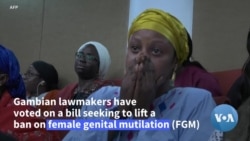
Gambian parliamentarians on Tuesday moved a bill seeking to lift a ban on female genital mutilation, FGM, to the next stage which will be examined by committee for at least three months before returning to the legislative body for a third reading. VOA Africa produced this report which explains the consequences of passing the FGM bill and how it impacts women and girls in the West African nation.
Gambian Activists Speak Against Parliamentary Efforts to End Ban on FGM

Gambian activists took to the streets of the nation’s capital, Banjul, on Monday to protest debates by lawmakers that could overturn a ban on female genital mutilation, FGM. Human rights groups say FGM is disastrous for women’s rights worldwide, despite many communities continuing the practice as a right of womanhood, according to the United Nations. Reuters’ David Doyle has more.
Gambian Lawmakers Vote on Repealing Female Genital Mutilation Ban

BANJUL — Gambian lawmakers were due on Monday to vote on a proposal to repeal a ban on female genital mutilation, FGM, which if approved would mark a rare setback for efforts to criminalize the practice.
In 2015, the West African nation imposed steep fines and jail sentences for those who carry out FGM, which the World Health Organization says has no health benefits and can lead to excessive bleeding, shock, psychological problems, and death.
Despite progress in enacting legal bans, the United Nations Children's Fund found in a report released earlier this month that the number of women and girls who have undergone FGM worldwide increased from 200 million eight years ago to 230 million now.
It is practiced in 92 countries, 51 of which have laws banning it, according to Equality Now, an advocacy group.
Gambia's ban, adopted under former president Yahya Jammeh, has faced pushback in the overwhelmingly Muslim country, particularly since President Adama Barrow came to power in 2017.
Three women were fined last August for carrying out FGM on eight infant girls, becoming the first people convicted under the law.
The Gambia Supreme Islamic Council responded to the verdict by saying female circumcision was one of the virtues of Islam and calling on the government to reconsider the ban.
Lawmaker Almameh Gibba presented the repeal bill earlier this month, arguing that the law violates citizens' rights to practice their culture and religion.
Members of parliament have come out both in favor of and against the bill, and it was not immediately clear which way the vote might go. Barrow has not spoken publicly on the issue.
Nearly 180 Gambian civil society organizations released an open letter last October calling on the government to preserve the law.
"Repealing the anti-FGM law would undo the considerable gains made in safeguarding the rights and well-being of women and girls," they said.
Gambian Ex-Minister Alleges Racism, Lies as Swiss Crimes Against Humanity Trial Closes
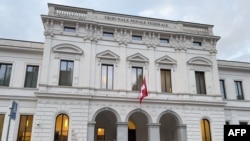
GENEVA — Switzerland's first full trial of crimes against humanity concluded this week, with the defendant, a former Gambian minister accused of rape and murder, giving a defiant closing speech in which he claimed to be a victim of racism and lies.
Ousman Sonko, a former interior minister of Gambia under ousted dictator Yahya Jammeh, is the highest-ranking official ever to be tried in Europe using universal jurisdiction which allows the most serious crimes to be prosecuted anywhere.
During the trial in Switzerland's Federal Criminal Court in Bellinzona, the court heard details of the charges of rape, torture and murder allegedly committed between 2000-2016 either by Sonko or under his watch.
"I regret that they (the plaintiffs) discredited themselves in this way by lying, with the sole aim of supporting the accusation against me, in defiance of the truth," Sonko, 55, said in closing remarks before the court late on Thursday.
He also denounced his seven-year pre-trial detention — a period which he said was partly spent in solitary confinement and affected his health. Sonko told the court it was "part of a history of colonialism and racism."
"My country does not need expatriatory victims immolated before foreign judges," he said.
The Attorney General's office said it could not comment on a statement provided by the accused person.
A U.N.-mandated report said in 2022 that while landlocked Switzerland had never had an empire, its banks and authorities benefited from colonialism and systemic racism persists in the country.
Benoit Meystre, a legal adviser at campaign group TRIAL international, which filed the complaint against Sonko, said he found the ex-minister's closing speech "disturbing."
"He was pretty disrespectful towards Gambians as he was positioning himself as the victim," he said.
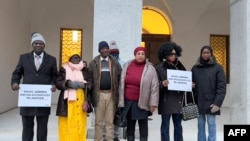
Tears, heavy silences
Sonko fell out with Jammeh in the final months of his 22-year repressive rule before the latter was forced to flee in January 2017 after an election defeat. That same month, Sonko was arrested in Switzerland while seeking asylum.
Switzerland's public prosecutor is seeking the maximum penalty of life imprisonment.
Witnesses described the trial as emotional, with testimony punctuated by heavy silences and occasional tears.
One of the plaintiffs, Binta Jamba, told the court she was raped multiple times by Sonko after he murdered her husband. The court removed the defendant to a side room during her testimony. Sonko said he was abroad when the alleged rapes occurred.
Her lawyer Annina Mullis, who is acting for several plaintiffs, voiced confidence they had built a strong case.
"The defense still could not explain many of the contradictions between the defendant's declarations and the facts established," she told Reuters.
No date for a verdict has yet been given.
Trial of Former Gambian Minister Opens in Switzerland
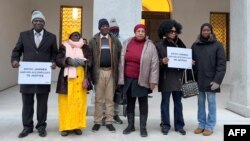
BELLINZONA, SWITZERLAND — The trial of Ousman Sonko, a Gambian former interior minister accused of crimes against humanity committed under the regime of ex-dictator Yahya Jammeh, is set to open in Switzerland on Monday.
Sonko’s trial will take place under the principle of universal jurisdiction, which allows a foreign country to prosecute crimes against humanity, war crimes and genocide regardless of where they were committed.
The case is being heard at the Federal Criminal Court of Switzerland, in the southern city of Bellinzona, where proceedings should last a month and the verdict unlikely to be delivered before March.
If convicted, Sonko could face life imprisonment. He denies all the charges.
Sonko oversaw the office of interior minister from 2006 until 2016, under the leadership of Jammeh who governed the West African nation with an iron grip from 1994 to 2016.
The former interior minister has been in custody since his arrest in Switzerland in January 2017 after applying for asylum following his sacking from the post.
Sonko, who turns 55 on Tuesday, was detained after a complaint by the Geneva-based NGO Trial International.
He can face trial in Switzerland because in 2011, the Alpine nation recognized the right to judge the most serious crimes alleged to have taken place abroad — providing the suspect is on Swiss soil.
"This trial is a significant moment in Swiss judicial history, being only the second trial for crimes against humanity in the country," said Trial International president Leslie Haskell.
"Ousman Sonko will also be the highest-ranking state official ever to be tried for international crimes under the principle of universal jurisdiction in Europe."
Following a criminal investigation lasting more than six years, in April last year the Office of the Attorney General of Switzerland filed an indictment against Sonko.
The former minister is accused of "having supported, participated in and failed to prevent systematic and generalized attacks as part of the repression carried out by the Gambian security forces against all opponents of the regime."
The charges span a 16-year period and include nine counts of crimes against humanity.
Sonko is accused of having "deliberately killed, tortured, raped and unlawfully deprived individuals of their liberty in a serious manner."
There are 10 complainants in the case, according to Trial International, including eight "direct victims" and the daughter of a person who died in detention.
Another complainant died last year, but their successors have continued with the case.
"This trial offers hope for the victims of several decades of repression in The Gambia to get answers about the crimes committed against the Gambian population," Trial's legal adviser Benoit Meystre said.
Sonko is accused of having committed the alleged crimes in his roles first within the army, then as inspector general of the police and finally as a government minister.
His lawyer, Philippe Currat says responsibility for the events on the charge sheet lies with the national intelligence agency and not Sonko.
"This agency has never been under the authority or control, in fact or law, of Ousman Sonko," Currat said.
The defense also intends to argue that some of the allegations must be excluded because they pre-date 2011, when crimes against humanity became enshrined in Swiss law.
This point is expected to dominate Monday's hearings.
Caroline Renold, a lawyer for three of the complainants, alleged that Sonko "played a key role in implementing the repression of the civilian population" and "is accused of having directly participated in atrocities."
Gambia's Ongoing Bid for Justice Over Crimes Under Ex-Dictator

BANJUL, GAMBIA — Delivering justice for crimes committed by the Gambian state under ex-dictator Yahya Jammeh is one of the major issues facing President Adama Barrow, who took the reins of the tiny West African nation in 2016.
Jammeh ruled The Gambia with an iron fist for 22 years but fled the country in January 2017 after losing a presidential election to political newcomer Barrow.
The trials for crimes committed under Jammeh's rule have so far taken place in courts a long way from continental Africa's smallest country, which is home to about 2.5 million people.
Former interior minister Ousman Sonko will go on trial in Switzerland on Monday accused of crimes against humanity committed under Jammeh's regime. Sonko was arrested in Switzerland in January 2017 following an asylum application.
It comes just over a month after a German court sentenced a Gambian man to life in prison over his participation in a death squad that assassinated opponents of Jammeh.
In 2022, the government committed to implementing recommendations made by a truth commission, known as the TRRC, which probed alleged crimes committed during the Jammeh era.
The TRRC found that 240 to 250 people were killed by the state during his regime.
It also found evidence of widespread extrajudicial killings, torture, enforced disappearances, witch hunts and other human rights abuses.
Barrow's government said it would prosecute 70 people named in the TRRC report, including Jammeh, who fled to Equatorial Guinea after being forced out by a popular uprising.
In February last year, the government began working with regional bloc ECOWAS to set up a tribunal to try crimes committed during the brutal dictatorship.
At the end of December, the justice minister ordered the establishment of a Special Criminal Division within the High Court, which will try cases related to the Jammeh era.
But whether the former dictator will be tried remains uncertain.
There is no extradition treaty between Equatorial Guinea and The Gambia, where Jammeh still exerts influence.
While the region has faced a series of military coups since 2020, The Gambia has undergone a re-establishment of democracy.
Following recommendations from the TRRC, parliament in November adopted two bills aimed at providing reparations for victims of Jammeh's regime and barring those suspected of having committed crimes from public office.
India Drug Regulator Requires Quality Checks For Cough Syrup Ingredient

NEW DELHI — India's drugs regulator has ordered that the source and quality of an ingredient used to make cough syrups be checked and verified as a "top priority," in the wake of the deaths of at least 141 children globally.
In one of the world's worst such waves of poisoning, cough syrups made by three Indian manufacturers have been linked to the deaths of dozens of children in the Gambia, Uzbekistan and Cameroon since the middle of last year.
The drugmakers have denied allegations that their products were responsible for the deaths, which have cast a shadow over the quality of exports from India, often dubbed the "world's pharmacy" due to its supply of life-saving drugs at low prices.
In a letter this week, India's Drug Controller General Rajeev Singh Raghuvanshi directed state and regional authorities to carry out inspections and verify the source and quality of propylene glycol, PG, either produced domestically or imported by cough syrup makers.
He also directed drugs inspectors to submit a supply chain verification report for PG manufacturers and importers
The direction was issued to rule out "possible quality issues" related to toxins diethylene glycol, DEG, and ethylene glycol, EG, in cough syrups and the diversion of industrial grade PG, Raghuvanshi said in a letter dated December 6 and seen by Reuters.
PG is a colorless, viscous liquid that does not react with other substances, making it an ideal solvent for syrupy medicines. Reuters has reported that some Indian drugmakers were buying key ingredients from suppliers who were not licensed to sell pharmaceutical-grade products.
DEG and EG are used as industrial solvents and antifreeze agents and can be fatal when consumed even in small amounts.
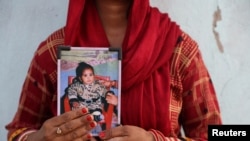
The syrups linked to the deaths of the children were found to contain high levels of DEG or EG in tests done by the World Health Organization and other authorities.
Raghuvanshi has requested details including the number of cough syrup batches manufactured across India in 2023, the PG used and whether it was tested before use.
Raghuvanshi also issued an advisory on December 5 asking all drugmakers to purchase and use only pharmaceutical grade ingredients in their products.
India has introduced mandatory testing for cough syrup exports since June and stepped up scrutiny of drugmakers, finding a string of deficiencies in recent inspections including poor documentation and a lack of self-assessment.
German Court Sentences Former Gambian President's Guard for Murder
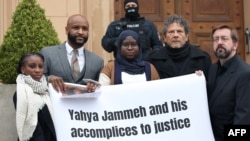
MUNICH, BANJUL — A German court on Thursday sentenced a driver in the elite guard of former Gambian president Yahya Jammeh to life in prison for crimes against humanity, murder and attempted murder that led to the death of a journalist and two other opponents of his rule.
A driver identified as Bai L., in line with German privacy rules, was a member of Jammeh's elite guard known as "the junglers" between 2003 and 2006.
In 2022, German prosecutors said they filed charges against Bai L, who on three occasions drove officers to locations where they fired at opponents of Jammeh.
Jammeh has been accused of mass killings, dumping bodies in wells, falsely claiming to have a herbal cure for AIDS, and for rape. He is yet to publicly comment on the allegations and is living in exile in Equatorial Guinea.
A spokesperson for the German court said Bai L. denied any involvement and that the verdict can still be appealed
Germany recognizes universal jurisdiction for serious crimes, allowing the accused to be tried there even though the offenses happened in Gambia.
The German court convicted Bai L. for his role in the murders of at least three of Jammeh's opponents, including journalist Deyda Hydara shot dead in 2004 on the outskirts of the capital Banjul, and an attack on a lawyer in 2003.
His son Baba Hydara welcomed the verdict as a milestone paving the way for "many more people to be held accountable."
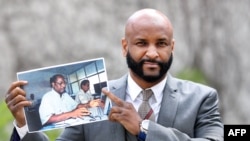
Reporters Without Borders said it was the first criminal trial relating to crimes against humanity under Jammeh's rule.
"This trial is an important sign for the people of Gambia," Nicola Bier, a legal adviser for the non-governmental organization, said.
Gambia's government said last year that it would seek to prosecute Jammeh for killings and other suspected crimes from, following a recommendation from a truth and reconciliation commission.
Forum