



Egypt
Turkey-Egypt rapprochement aims to soothe Libya tensions
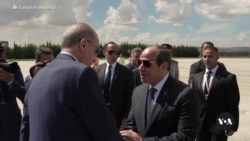

A rapprochement between Turkey and Egypt, the main supporters of the rival powers in Libya, could offer hope for easing tensions between the Libyan factions. Dorian Jones reports from Istanbul.
VOA60: Volunteers say 23 people dead after Sudan army strike marketplace and more
A network of volunteer rescuers said Sunday that Sudan’s army carried out an air strike a day earlier on a marketplace in Khartoum, leaving 23 people dead. The paramilitary Rapid Support Forces have been fighting the military as part of a civil war. In Switzerland, the head of the U.N. refugee agency Filippo Grandi warned Monday that displacement crises in Lebanon and Sudan could worsen but said tighter border measures were not the solution, calling them ineffective and sometimes unlawful. Grandi said an unprecedented 123 million people are now displaced around the world. These, and more Africa-related news updates on today’s VOA 60.
Egyptian president's visit to Turkey heralds new era of cooperation
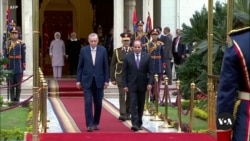
Egyptian President Abdel Fattah el-Sissi's visit to Turkey Wednesday signals an end to years of animosity with Turkish President Recep Tayyip Erdogan. Dorian Jones reports from Istanbul.
US secretary works with Egypt, other mediators for Gaza cease-fire
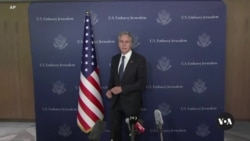
U.S. Secretary of State Antony Blinken visited Egypt’s capital, Cairo, where he met with President Abdel Fattah el-Sisi to discuss steps to work towards a cease-fire in Gaza. This came after the Washington diplomat on Monday spoke with Israeli officials who said they would support proposals to bring a ceasefire in Gaza where Israel is at war with Hamas, a Palestinian militant group. VOA’s Veronica Balderas Iglesias has more.
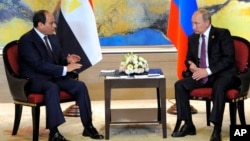
Egypt to support South Africa in International Court of Justice Case
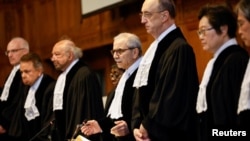

Israel seizes Rafah border crossing, denies UN entry
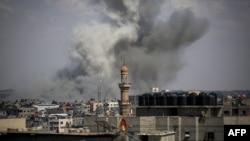
Israel’s military seized control of the Rafah border crossing between the Gaza Strip and Egypt on Tuesday and later denied the United Nations access to the entry point which is pivotal for humanitarian aid into the Palestinian enclave.
Israeli military took over the border crossing after they had pushed into the southern Gazan town on Monday. Prior to that, residents of the Palestinian enclave experienced a night of airstrikes by the Middle Eastern nation.
While Israel executed its offensive in Rafah, Egyptian and Qatari mediators struggled to secure a cease-fire agreement between the Middle Eastern nation and its Hamas foes.
Hamas on Monday agreed to the cease-fire proposals, but Israel said the terms did not meet its demands.
After occupying Rafah border crossing, Israeli authorities denied the U.N. from entering the aid access points for Gazans, the international body said.
Jens Laerke, the spokesperson for the U.N.'s humanitarian agency OCHA, said there was only a one-day buffer of fuel to run humanitarian operations inside Gaza.
"We currently do not have any physical presence at the Rafah crossing as our access... has been denied by COGAT," Laerke said, referring to the Israeli agency that oversees supplies into the Palestinian territories.
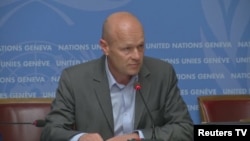
"We have been told there will be no crossings of personnel or goods in or out for the time being. That has a massive impact on how much stock do we have,” the U.N. authority said, adding, "there's a very, very short buffer of one day of fuel available. As fuel only comes in through Rafah, the one-day buffer is for the entire operation in Gaza."
Laerke warned that if no fuel is delivered to Gaza, "it would be a very effective way of putting the humanitarian operation in its grave."
"Currently, the two main arteries for getting aid into Gaza are currently choked off," he said, referring to the Rafah crossing from Egypt and the Kerem Shalom crossing from Israel.
While international bodies expressed concern over the plight of civilians crammed into Rafah, Israeli tanks continued its military operation in the area.
On Tuesday morning, people searched for bodies under the rubble of wrecked buildings. One corpse was taken away for burial, wrapped in a white shroud.
Raed al-Derby said his wife and children had been killed.
Standing in the street, anguish etched on his face, he told Reuters: "We're patient and we will remain steadfast on this land.. We are waiting for liberation and this battle will be for liberation, God willing."
More than one million people have sought refuge in Rafah, living in tented camps and makeshift shelters. Many are trying to leave, heeding Israeli orders for them to evacuate, but with large areas of the coastal enclave already laid to waste, they say they have nowhere safe to go to.
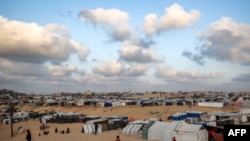
The Israeli military said a limited operation in Rafah was meant to kill fighters and dismantle infrastructure used by Hamas, which governs the besieged Palestinian territory.
Speaking to reporters on Tuesday, Josep Borrell, the European Union’s foreign policy chief said Israel’s operation in Rafah “is going to cause again a lot of casualties, civilian casualties.”
"There are no safe zones in Gaza," Borrell added.
Israel has for weeks threatened to mount a major incursion in Rafah, which it says harbors thousands of Hamas fighters and potentially dozens of hostages.
Victory over Hamas is impossible without taking Rafah, Israeli authorities say.
A total of 34,789 Palestinians, most of them civilians, have been now killed in the conflict, according to Gaza’s health ministry.
Fighting between Israel and Hamas started on October 7 after the militant group killed at least 1,200 people and abducted 250 others in the Middle Eastern nation.
133 hostages are believed to remain in captivity in Gaza, according to Israeli tallies.
Information for this article was sourced from Reuters and Agence France-Presse.
Hamas negotiators arrive in Egypt for Gaza truce talks
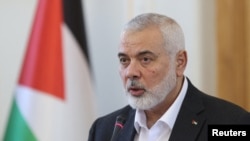
CAIRO, EGYPT — Hamas negotiators arrived in Cairo on Saturday for intensified talks on a possible Gaza truce with Israel that would see the return to the Middle Eastern nation of some hostages, an official with the militant group said.
Egypt's state-affiliated Al-Qahera News TV channel also confirmed the arrival of the Hamas delegation in Cairo.
An Egyptian source who spoke to Reuters said, "the results today will be different. We have reached an agreement over many points, and a few points remain."
A Palestinian official with knowledge of the mediation efforts sounded cautious optimism.
"Things look better this time but whether an agreement is on hand would depend on whether Israel has offered what it takes for that to happen," the official, who asked not to be named, said.
The Hamas delegation arrived from the Palestinian Islamist movement's headquarters in Qatar, which along with Egypt, has tried to mediate a follow-up to a brief November cease-fire.
The United States - which, like other Western powers, brands Hamas a terrorist group - has urged it to enter a deal. However, the talks have stumbled over the militant group’s long-standing demand for a commitment to end the almost seven-month-old offensive by Israel.
Israel insists that after any truce it would resume operations designed to disarm and dismantle Hamas.
"Israel will under no circumstances agree to ending the war as part of a deal to free our hostages," an Israeli official said on Saturday, signaling this core position was unchanged.
Hamas said on Friday it would come to Cairo in a "positive spirit" after studying the latest proposal for a deal, little of which has been made public.
Israel has given a preliminary nod to terms which one source said included the return of between 20 and 33 hostages in exchange for the release of hundreds of Palestinian prisoners and a weeks-long suspension of fighting. That would leave around 100 hostages in Gaza, some of whom Israel says have died in captivity.
The source, who asked not to be identified by name or nationality, said their return may require an additional deal with broader Israeli concessions.
"That could entail a de facto, if not formal, end to the war - unless Israel somehow recovers them through force or generates enough military pressure to make Hamas relent," the source said.
Egyptian sources said CIA Director William Burns arrived in Cairo on Friday. He has been involved in previous truce talks and Washington has signaled there may be progress this time.
The CIA declined to comment on Burns' itinerary.
Egypt made a renewed push to revive negotiations late last month after Cairo was alarmed by the prospect of an Israeli assault against Hamas in Rafah in southern Gaza, where more than 1 million Palestinians have taken shelter near the border with the North African nation’s Sinai Peninsula.
A major Israeli operation in Rafah could deal a huge blow to fragile humanitarian operations in Gaza and put many more lives at risk, according to U.N. officials.
Israel says it will not be deterred from taking Rafah eventually and is working on a civilian evacuation plan.
Saturday's Cairo talks come as Qatar reviews its role as mediator, according to an official familiar with Doha's thinking.
Qatar may cease hosting the Hamas political office, said the official, who did not know if, in such a scenario, the Palestinian group's delegates might also be asked to leave.
The war began after Hamas staged a cross-border raid on October 7 in which 1,200 people in southern Israel were killed and 252 hostages taken, according to Israeli tallies.
More than 34,600 Palestinians have been killed, 32 of them in the past 24 hours, and more than 77,000 have been wounded by Israeli fire during a campaign that has laid waste to the coastal enclave, according to Gaza's health ministry.
IMF Confirms It's Increasing Egypt's Bailout Loan to $8 Billion
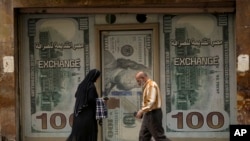
CAIRO — The executive board of the International Monetary Fund confirmed a deal with Egypt to increase its bailout loan from $3 billion to $8 billion, in a move that is meant to shore up the Arab country’s economy hit by a staggering shortage of foreign currency and soaring inflation.
In a statement late Friday, the board said its decision would enable Egypt to immediately receive about $820 million as part of the deal which was announced earlier this month.
The deal was achieved after Egypt agreed with the IMF on a reform plan that is centered on floating the local currency, reducing public investment and allowing the private sector to become the engine of growth, the statement said.
Egypt has already floated the pound and sharply increased the main interest rate. Commercial banks are now trading the U.S. currency at more than 47 pounds, up from about 31 pounds. The measures are meant to combat ballooning inflation and attract foreign investment.
The Egyptian economy has been hit hard by years of government austerity, the coronavirus pandemic, the fallout from Russia’s full-scale invasion of Ukraine, and most recently, the Israel-Hamas war in Gaza.
The Houthi attacks on shipping routes in the Red Sea have slashed Suez Canal revenues, which is a major source for foreign currency. The attacks forced traffic away from the canal and around the tip of Africa.
“Egypt is facing significant macroeconomic challenges that have become more complex to manage given the spillovers from the recent conflict in Gaza and Israel. The disruptions in the Red Sea are also reducing Suez Canal receipts, which are an important source of foreign exchange inflows and fiscal revenue,” said IMF’s Managing Director Kristalina Georgieva.
The IMF said such external shocks, combined with delayed reforms, have negatively impacted economic activity. Growth slowed to 3.8% in the fiscal year 2022-23 due to weak confidence and foreign currency shortages, and is projected to slow further to 3% in the fiscal year 2023-24 before recovering to about 4½ percent in 2024-25, the IMF statement said.
The annual inflation rate was 36% in February, but is expected to ease over the medium term, the IMF said.
Nearly 30% of Egyptians live in poverty, according to official figures.
Finance Minister Mohamed Maait said the confirmation by the IMF’s executive board “reflects the importance of the correcting measures” taken by the government.
Egypt also this month signed a deal with the European Union that includes a 7.4 billion-euro ($8 billion) aid package for the most populous Arab country over three years.
To quickly inject much-needed funds into Egypt’s staggering economy, the EU intends to fast-track 1 billion euros ($1.1 billion) of the package, using an urgent funding procedure that bypasses parliamentary oversight and other safeguards, according to European Commission President Ursula von der Leyen.
Egypt Strives for Gaza Cease-Fire, Sisi Says
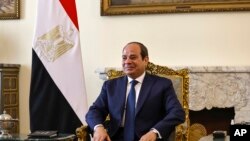
DUBAI— Egypt is seeking to reach a deal for a cease-fire in Gaza, increase entry of aid and to allow displaced people in the south of the enclave to move to the north, President Abdel Fattah al-Sisi said on Friday.
Sisi warned against the danger of an Israeli incursion into the city of Rafah, where an estimated 1.5 million people have sought shelter next to Gaza's border with Egypt.
Aid officials have warned of looming famine in the coastal enclave.
"We are talking about reaching a cease-fire in Gaza, meaning a truce, providing the biggest quantity of aid," Sisi said in a message recorded during a visit to the police academy.
This would include "curbing the impact of this famine on people, and also allowing for the people in the center and the south to move towards the north, with a very strong warning against incursion into Rafah", the Egyptian leader added.
Egypt "warned of what is happening, that aid not entering would lead to famine," Sisi said.
The North African nation, which fears the displacement of Palestinians crowded near its border, has been trying, along with Qatar and the United States, to mediate between Israel and Hamas to reach an agreement for a cease-fire and the release of Israeli hostages in return for Palestinian prisoners.
On Thursday, Egypt's foreign minister called on Israel to open land crossings with Gaza to let in more aid.
Sudanese Army Chief Travels to Egypt, Meets President
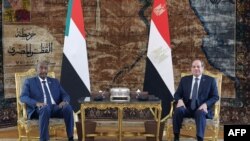
CAIRO, EGYPT — Sudan’s army chief Abdel Fattah al-Burhan on Thursday met with Egyptian President Abdel Fattah al-Sisi in Cairo, as the conflict between the Sudanese Armed Forces and the paramilitary Rapid Support Forces approaches one year.
The pair "will hold joint bilateral discussions" and "discuss ways to strengthen bilateral relations," according to a statement from Sudan’s governing sovereignty council.
Since last April, Burhan has been at war with his former deputy, Mohamed Hamdan Dagalo, who commands the paramilitary Rapid Support Forces, RSF.
In footage broadcast by the presidency, Sisi embraced Burhan — Sudan’s de facto leader since he and Dagalo led a joint coup in 2021 — at the airport in Cairo and received him in the presidential palace with the ceremony reserved for heads of state.
The presidency also said the pair would discuss "deescalating the situation" in Sudan.
Burhan and his government have retreated to the country's east, governing from the coastal city of Port Sudan, while the RSF controls much of the capital Khartoum, nearly the entire western Darfur region and much of the country's south.
The conflict between the rival forces has killed tens of thousands, including up to 15,000 in a single West Darfur town, according to United Nations experts. It has also decimated the economy, destroyed infrastructure and forced over eight million people from their homes, according to U.N. figures.
For months, Cairo was Burhan's strongest ally amid fighting against RSF.
When Burhan finally exited a four-month RSF siege of his Khartoum military headquarters in August, Egypt’s northern city of El Alamein was his first destination abroad.
The fighting generals have since chased each other around regional capitals, each trying to position himself as lead statesman.
But in recent months, Dagalo appears to have gained the diplomatic upper hand, while his troops made aggressive advances on the ground, pushing the army to retreat and prompting Egypt to distance itself from Burhan, according to analysts.
The Sudanese government, loyal to the army, has on the other hand drawn closer to Iran, with Sudan’s foreign minister visiting Tehran earlier this month.
The United States has in turn voiced concern over "reports about resumed ties between Sudan and Iran that could reportedly include Iranian material support" to the army, which this month managed to regain control of parts of greater Khartoum.
Both sides have been accused of atrocities, including indiscriminate shelling of civilian areas, torture and obstructing humanitarian aid.
Since the fighting began between Sudan’s rival forces, Western governments and aid groups have warned that international actors could be exacerbating the conflict, with the United Arab Emirates accused of funneling arms to RSF.
Egypt Receives Part of the Funds from UAE Deal, President Says
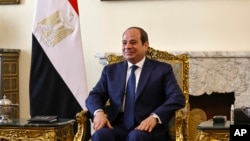
DUBAI — Egyptian President Abdel Fattah al-Sisi on Wednesday said part of the funds announced in the deal between his country and the United Arab Emirates to develop the Ras al-Hikma real estate project have arrived in the central bank.
Egypt signed a deal on Friday with the UAE to develop a peninsula on its north coast and carry out other projects. The North African nation’s prime minister said the deal would bring $35 billion in investments to the indebted country over the next two months.
"I want to thank our brothers in the UAE, led by my brother his Excellency the President Sheikh Mohammed bin Zayed," Sisi said while attending a "Differently Abled" event in New Cairo.
"I want to tell you it is not easy for anyone to deposit $35 billion over two months, there is nothing like that in the world … This is a form of support and standing (with us), clearly," the Egyptian president added.
Under the deal announced on Friday ADQ, the smallest of Abu Dhabi's three main sovereign investment funds, said work would begin in early 2025 to build a "next generation city" over 170 square kilometers at Ras El Hekma on Egypt's Mediterranean coast.
Speaking with reference to the project, Sisi said "we are not talking about just two, three or four months in the winter of the summer, we are talking about something that has life all year round, with many activities, some of which will be in Egypt for the first time."
Ras El Hekma lies about 200 kilometers west of Alexandria in an area of upscale tourist resorts and white sand beaches.
UAE to Invest $35 Billion to Help Egypt Solve Currency Crisis, Prime Minister Says
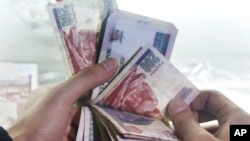
CAIRO, EGYPT — The United Arab Emirates will inject $35 billion in foreign direct investment into Egypt over the next two months, Egyptian Prime Minister Mostafa Madbouly said at a news conference on Friday.
Madbouly said the investment would "contribute to resolving" a hard currency crunch that has threatened Egypt’s ability to service its large foreign debt and allow it to end separate official and black-market exchange rates for the nation’s pound.
Emirati sovereign wealth fund ADQ said that $24 billion of the investment would go to developing the Ras al-Hikma area west of Alexandria on the Mediterranean coast. The remaining $11 billion would go toward "deposits that will be utilized for investment in prime projects across Egypt to support its economic growth and development", according to a press release.
The deal signed between the two governments foresees the injection of a first tranche of $15 billion over the next week, with a second tranche of $20 billion following within the next two months.
Madbouly said the Ras al-Hikma project would see the development of a full resort city with an airport to be managed by the UAE.
Egypt’s highly import-reliant economy, dominated by military-linked enterprises and with a fondness for infrastructure mega-projects, has been hit hard by a series of recent shocks.
The pandemic battered the North African nation’s key tourism sector.
The ongoing war between Russia and Ukraine raised the cost of wheat and other imports. And recent attacks by Yemen's Houthi rebels on Red Sea shipping have slashed vital Suez Canal fees.
Remittances from overseas Egyptian workers — the main source of foreign currency — slumped by as much as 30 percent in July-September 2023 alone, according to data released by Egypt’s Central Bank.
The Egyptian state, highly indebted after years of heavy borrowing, including for a new capital city in the desert east of Cairo, has struggled to service its ballooning debt.
The International Monetary Fund has stepped in with a $3 billion loan facility but demanded painful austerity measures.
Loan tranches and program reviews have been repeatedly delayed until Cairo moves ahead with promised reforms, including a fully flexible exchange rate, the IMF says.
The currency crunch has undermined confidence among Western investors about Egypt’s ability to service its debts.
International investment bank JP Morgan recently announced it would exclude Egypt from its index of government bonds, while ratings agency Moody's lowered its outlook on Egyptian bonds from "stable" to "negative".
Trial of Egyptian Security Agents Reopens in Rome

ROME — The trial of four Egyptian security agents accused of kidnapping and murdering an Italian student in Cairo resumed in Rome on Tuesday after a prolonged delay following questions over the legality of proceedings.
Giulio Regeni, a postgraduate student at Britain's Cambridge University, disappeared in the Egyptian capital in January 2016. His body was found almost a week later, and a post-mortem examination showed he had been tortured before his death.
Italian prosecutors allege four Egyptian officials were involved in the killing but have been unable to track them down to issue summons. As a result, they are being tried in absentia.
Proceedings originally opened in October 2021, but were immediately suspended after the judge questioned whether the trial would be legitimate if it was not clear that the accused even knew they had been charged.
Italy's top court dismissed the concern last year, saying Egypt's failure to cooperate in locating the suspects should not stymie the trial. Prosecutors from both nations investigated the case but came to different conclusions.
Egypt said the killing was the work of criminal gangsters and denied any state involvement in Regeni's disappearance or death.
Italian prosecutors say Major Magdi Sharif, from Egypt's General Intelligence, Major General Tarek Sabir, the former head of state security, police Colonel Hisham Helmy and Colonel Ather Kamal, a former head of investigations in Cairo city, were responsible for the "aggravated kidnapping" of Regeni.
Sharif has also been accused of "conspiracy to commit aggravated murder."
The four men have never responded publicly to the accusations.
Regeni had been in Cairo to research Egypt's independent unions for his doctoral thesis. Associates say he was also interested in the long-standing domination of Egypt's economy by the state and military. Both subjects are sensitive in Egypt.
Prosecutors say they have evidence showing that Sharif got informants to follow Regeni and eventually had him arrested in a Cairo metro station.
The charge sheet says Sharif, and other, unidentified Egyptian officials, then tortured Regeni over several days, causing him "acute physical suffering."
When the trial initially opened in 2021, prosecutor Sergio Colaiocco told the court that Egypt had tried to sabotage the investigation and had prevented the suspects from being informed of the charges.
Colaiocco said Egyptian investigators had ignored 39 out of 64 requests for information, adding that the material that was handed over was often useless, such as video from the metro station where Regeni had disappeared.
The video was blank for the 20 minutes Regeni had been there, Colaiocco added.
Forum