


Conflict
Nigeria Security Stepped Up as U.S. Embassy Empties
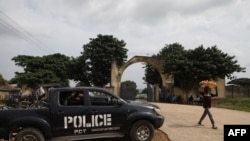
Nigeria's police force said it was beefing up security as the United States ordered diplomats' families to leave the capital Abuja due to a "heightened risk of terrorist attacks."
The Nigerian statement came as the US State Department on Thursday ordered the departure of diplomats' families and also authorized the departure of non-emergency government employees from Abuja.
"Terrorists may attack with little or no warning," targeting malls, markets, hotels, places of worship, restaurants, bars or schools, the State Department said in its country summary for Nigeria, but did not give further details.
The United States, Britain, Australia and Canada had issued warnings last weekend, although the three latter countries had not ordered any evacuation of staff or their families as of Friday morning.
The government said that Nigerians and foreigners in the country "should continue to be alert but must not panic."
"I can assure all that our military and other security agencies have continued to do everything possible to secure and protect Nigerians and foreigners living in Nigeria," said the Minister of Information and Culture Alhaji Lai Mohammed.
"Terrorists have been hard hit and put on the run," he said during a press conference on Tuesday.
On Thursday, Jabi Lake Mall, a major shopping center in Abuja was temporarily shut down for unspecified security reasons.
Some European embassies and international organisations in Abuja have not updated their risk assessments or travel advisories.
"We have no crisis to manage, we are managing the panic," a senior security manager with an international organisation based in the capital told AFP, asking to remain anonymous.
"We don't know what the motive is (behind the US evacuation). We are taking some precautionary measures/actions, but activities are normal," he added.
Nigerian troops are deployed throughout the West African nation of some 200 million people, fighting against Islamist insurgents and heavily armed criminals.
The last time one of the groups - Boko Haram - attacked the city center was in 2014.
But the Islamic State West Africa Province, linked to the Islamic State group, has claimed several attacks around the FCT in the past six months, including a mass jailbreak in July.
See all News Updates of the Day
Africa News Tonight: Hunger, violence stalk Goma residents, US considers AFRICOM changes, Cyclone batters southern Africa


Africa News Tonight: Angola advances DRC talks, Tunisian opposition leaders remain jailed, US firefighters team up with Liberian colleagues
Southern Africa bloc to begin phased withdrawal of troops from DRC
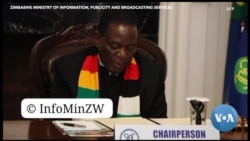
The Southern African Development Community or SADC said Thursday that a summit of regional heads of state had terminated the mandate of its troop deployment in the eastern part of the Democratic Republic of Congo and decided on a "phased withdrawal." SADC lost more than a dozen soldiers in conflict in January. The 16-nation bloc took the decision at a virtual summit on the conflict in the area that has seen some three decades of unrest and claimed millions of lives. "Summit terminated the Mandate of SAMIDRC and directed the commencement of a phased withdrawal of SAMIDRC troops from the DRC," the Southern African bloc said in a communique after the summit. The SADC Mission in the Democratic Republic of Congo, SAMIDRC, — made up of soldiers from Malawi, Tanzania and South Africa — was sent to the region in December 2023 to help the government of the DRC, also a SADC member, restore peace and security. SADC extended its mandate late last year.
Africa News Tonight: DRC, US in talks on trade and security, concerns of civil war risk in South Sudan, tariff talk rattles stock markets

University students resume studies in Bukavu as DRC crisis deepens
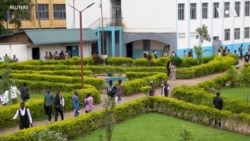
University students in Bukavu, in the east of the Democratic Republic of Congo, are gradually returning to class for the first time since M23 rebels took their city last month. Toto Mufungizi, a student, said while they were home “during these months, we have endured many strange things.” “We stayed at home for at least one month and three weeks. We were confined due to this security situation. Even today, there is no serenity, we cannot move around safely," he told Reuters. The M23 rebel group captured Bukavu, South Kivu's capital, in mid-February, forcing a weeks-long suspension of academic activities. The Official University of Bukavu, UOB, and other institutions have now reopened, but security concerns persist. "We are afraid because we heard rumors that in Goma, students were kidnapped. Here, we are also afraid," third-year student Patient Kaliwe said. Some information for this report was provided by Reuters.
Africa News Tonight: Expert calls for dialogue in DRC conflict, Uganda sends troops to Juba, top US, Ukrainian diplomats talk in Jeddah
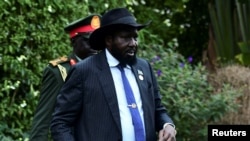
Africa News Tonight: Exploring the roots of DRC's conflict, Sudan’s displaced face hunger, Morocco's traditions shape Ramadan observances
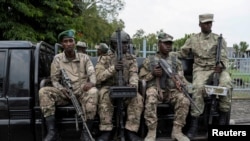
US-Ukraine to hold talks in Saudi Arabia on how to end war with Russia
Even as U.S.-led peace negotiations to end Russia’s war in Ukraine recently faced setbacks, talks between Washington and Kyiv are set to take place this week in Saudi Arabia. VOA’s Veronica Balderas Iglesias has the details.
US hostage envoy calls Hamas meeting ‘helpful’
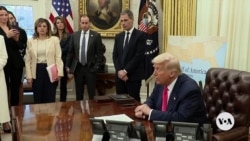
A Trump administration hostage negotiator called his recent meetings with representatives of U.S.-designated terror group Hamas “helpful.” Discussions focused on the release of an American-Israeli hostage held by Hamas. This, as Israel says it plans to deploy a delegation this week to discuss ceasefire talks. VOA’s Arash Arabasadi has the story.
Africa News Tonight: Arab nations plan Gaza’s future, Afrikaner groups accused of treason, Sudan health workers struggle to provide care

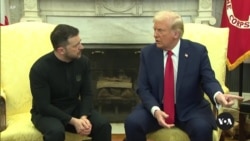
Russia waits for Trump's next move after clash with Zelenskyy

Russians are carefully watching U.S. President Donald Trump's push for an end to the war in Ukraine after his heated encounter last week with Ukrainian leader Volodymyr Zelenskyy. Elizabeth Cherneff narrates this report from Moscow.
European leaders question the halt in US military aid to Ukraine
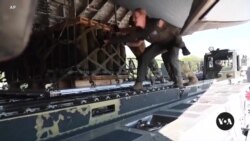
U.S. President Donald Trump ordered a "pause" Monday to military aid shipments to Ukraine with immediate effect, which his administration said was aimed at forcing all sides to peace talks. As Henry Ridgwell reports from London, European leaders have said it is vital to continue weapons shipments to Kyiv — but there are doubts over how long Ukraine can keep on fighting.