



Togo




Voting in Togo underway after new constitutional reforms

Voting got under way in legislative elections in Togo on Monday following approval of constitutional reforms by the outgoing parliament that could extend the 19-year-old rule of President Faure Gnassingbe.
Under a new chapter adopted in March introducing a parliamentary system of government, the president will be elected by parliament instead of by universal suffrage.
Details about the assembly's election of the head of state remain unclear, although under the new constitution the parliament will appoint a position described as president of the council of ministers, who will have extensive authority to manage Togo’s government affairs.
In power for nearly 20 years, Togo’s incumbent president succeeded his father Gnassingbe Eyadema, who ruled for almost four decades following a military coup.
Monday's vote had been pushed back twice because of a fierce backlash from some opposition parties who called the constitutional changes a political maneuver to allow Gnassingbe to extend his tenure for life.

Over four million people are registered to vote for 113 lawmakers among 2,352 candidates. Polls opened at 0700 GMT and provisional results are expected from Tuesday.
Regional elections are also taking place.
Observers say early turnout at polling stations in the capital, Lome, was scattered but the streets were calm.
Koffi Ohini, a 24-year-old farm technician who casted his ballot in Lome said he is a first-time voter.
"This is the first time I am voting, because I lived in a neighboring country before,” he said, adding, “I came out early to avoid crowds."
"I want to vote because these elections are important," Ohini said.
Monday's vote will elect 113 lawmakers and for the first time 179 regional deputies from the country's five districts who along with municipal councilors will elect a newly created Senate.
Opposition parties are contesting in the polls with hopes of gaining seats that will enable them to challenge Gnassingbe's UNIR party after they boycotted the last legislative poll and left it effectively in control of parliament.
Violent police crackdowns on political demonstrations have been routine under Gnassingbe - reelected in a 2020 landslide disputed by the opposition - as they were during his father's rule.
The 57-year-old leader has already won four elections, all contested by the opposition as flawed. He would have only been able to run one more time as president in 2025 under the previous constitution.
Several other African countries have pushed through constitutional and other legal changes in recent years allowing their presidents to extend their terms in office.
Monday's vote, initially set for April 20, was postponed twice to allow for consultations on the new constitution.

Amendments unanimously approved in a second parliamentary vote earlier this month shortened presidential terms to four years from five with a two-term limit.
This does not account for the time already spent in office, which could enable Gnassingbe to stay in power until 2033 if he is re-elected when his mandate expires in 2025. He has not yet stated his intentions.
Some opposition parties and civil society groups renewed calls for protests after the second vote, sparking small-scale demonstrations last week.
The outcome of Togo’s elections is expected to be known within the next six days.
Information for this article was sourced from Reuters and Agence France-Presse.
Togo political group questions legitimacy of the nation's new constitution
Togo's largest opposition party says it will never accept recent constitutional reforms

Togo opposition denounces ‘’constitutional coup’’ as parliament approves contested reforms
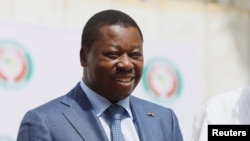
LOME — Lawmakers in Togo approved changes to its constitution on Friday linked to presidential term limits and how presidents are elected, which some opposition politicians and civil society groups have denounced as a constitutional coup.
Parliament passed amendments in a vote in March, but further consultations and a second parliamentary vote were scheduled, and legislative elections were pushed back due to fierce backlash.
Those opposed to the changes fear they could allow further extensions of President Faure Gnassingbe's 19-year rule and his family's grip on power. His father and predecessor Gnassingbe Eyadema seized power in the coastal West African country via a coup in 1967.
In the second vote, lawmakers unanimously approved the amended charter under which the president will no longer be elected by universal suffrage, but by members of parliament.
The amendments also introduce a parliamentary system of government and shortened presidential terms to four years from five with a two-term limit.
It does not take into account the time already spent in office, which could enable Gnassingbe to stay in power until 2033 if he is re-elected in 2025, a highly likely scenario as his party controls parliament.
The amendments amount to a "project to ... confiscate power by a regime that is systematically opposed to any form of democratic change," a group of 17 civil society organizations said in a joint statement this week. They called on West Africa's main political and economic bloc, the Economic Community of West African States, ECOWAS, to take action in response.
In recent years, several other African countries, including Central African Republic, Rwanda, Congo Republic, Ivory Coast and Guinea, have pushed through constitutional and other legal changes allowing presidents to extend their terms in office.
The West and Central African region has also witnessed eight military coups in the past three years.
Faure Gnassingbe was last reelected in a 2020 landslide election which was disputed by the opposition.
The new constitution also creates a new role, president of the council of ministers, with extensive authority to manage government affairs.
Togolese Opposition Members Arrested Over Campaign Against New Constitution

LOME — Nine Togolese politicians who were running a campaign against a new constitution that could allow President Faure Gnassingbe to extend his 19-year rule have been arrested, a spokesperson for an opposition coalition said on Thursday.
Opposition voices are growing in the phosphate-producing West African nation over constitutional reform that could change the way the president is elected.
Some members of the opposition coalition were detained on Wednesday while they were campaigning against the constitution at a market in the suburbs of Togolese capital Lome, spokesperson Thomas Nsoukpoe said.
Others were detained at night during a meeting at the house of a coalition member.
Togo's opposition parties started their campaign after the national assembly adopted the new constitution that lengthens presidential terms by one year to 6 from 5 while limiting the number of terms to one.
Under the new constitution, which introduces a parliamentary system of government, the president will no longer be elected by universal suffrage, but by members of parliament.
The constitution does not account for the time already spent in office, which could enable Faure Gnassingbe to stay in power until 2031 if he is re-elected in 2025.
In reaction to opposition voices, the president's office announced nationwide consultations on the revision of the constitution and delayed parliamentary and regional elections initially scheduled for April 20.
Several parties condemned this decision and called for demonstrations on April 11, 12 and 13.
"As the electorate has been convened by decree, it is not possible to suspend the electoral campaign and postpone the elections by means of a simple announcement," the parties said in a statement on Thursday.
The presidency did not immediately reply to Reuters requests for comment on the arrests made on Wednesday.
Togolese Journalist Jailed, Faces Multiple Charges Over Report Ahead of Elections
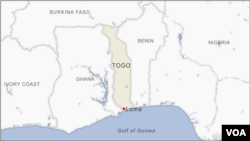
LOME, TOGO — The editor of a Togolese newspaper was arrested on Thursday night and faces seven charges including publishing "fake news", according to his lawyer, as media watchdogs warn of a press clampdown ahead of the nation’s upcoming elections.
Apollinaire Mewenemesse, editor of newspaper La Depeche, had been held by security forces since Tuesday in connection with an article published last month that questioned a general's conviction in the murder of a supporter of President Faure Gnassingbe.
Mewenemesse, 71, "went to prison this evening", said his lawyer, Me Darius Kokou Atsoo.
The journalist was charged with the "publication of fake news with the aim of inciting the public or the military to rise up against the state", among other crimes.
Mewenemesse's arrest comes as Togo faces a political crisis less than one month before legislative elections.
On Monday, parliament almost unanimously adopted a new constitution that ended elections for the nation’s leader. Instead, the president will now be selected by lawmakers "without debate."
Critics fear the reform, which was proposed by the ruling party, will allow Gnassingbe to remain in power indefinitely, though it is unclear when the change will take effect.
In 2005, Gnassingbe succeeded his father, General Gnassingbe Eyadema, who seized power in a coup more than 50 years ago.
Press watchdog Reporters Without Borders, RSF said Mewenemesse's arrest shows the increasing pressure on the media ahead of the April 20 legislative election.
Sadibou Marong, RSF's Sub-Saharan Africa director, urged his release "without delay."
While Togo has a vibrant media landscape and press freedom is protected by law, journalists' safety remains a major concern, especially for those who criticize the government, according to RSF. The organization ranked Togo 70th of 180 countries on its latest press freedom index.
Mewenemesse's newspaper, La Depeche, was suspended for three months on March 4 over a February 28 article that questioned a court's conviction of army head General Abalo Kadangha, according to the Committee to Protect Journalists.
Kadangha was sentenced to 20 years in prison for the murder of Lieutenant Colonel Bitala Madjoulba, a fervent Gnassingbe supporter who was found dead the day after the 2020 inauguration.
The article in question compared Kadangha's case to that of wrongly convicted French Jewish army captain Alfred Dreyfus in the late 19th century.
Togolese Police Break Up Opposition Event to Criticize Constitutional Reforms
LOMÉ — Police in Togo on Wednesday broke up an opposition press conference that was called to address constitutional reform criticized as a power grab, AFP journalists said.
The press conference was called after the West African nation's parliament voted for the new constitution on Monday, changing the presidential system to a parliamentary one.
With less than a month before legislative elections, the opposition say they fear the change will clear the way for long-serving President Faure Gnassingbe to remain in power indefinitely.
Around 30 police personnel armed with truncheons broke up the press conference put together by opposition parties and civil society groups, saying the event in the capital, Lome, did not have the necessary authorization.
"It's unacceptable, the Togolese regime is allowing itself absolutely everything, having changed the constitution on the sly," organizer and head of the Parti des Togolais (PT) Nathaniel Olympio told AFP.
"By depriving the Togolese people of the right to choose their president through this constitutional coup, the regime has crossed a red line," Olympio said in a statement after the event at the headquarters of the ADDI opposition party.
"I call on the Togolese people to stand up and stop this disastrous plan," he said.
The change to the constitution, proposed by a group of lawmakers mostly from the Union for the Republic (UNIR) ruling party, was adopted almost unanimously on Monday.
The president will be chosen "without debate" by lawmakers "for a single six-year term," and not by the public, according to the new text.
Currently, the president can serve a maximum of two five-year terms.
The country's opposition, which boycotted the last legislative elections in 2018 and condemned "irregularities" in the electoral census.
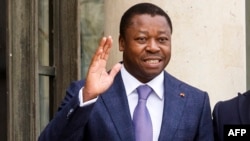
It is not yet known when the change — which was approved with 89 votes in favor, one against and one abstention — will come into force.
In 2019, members of parliament revised the constitution to limit presidential terms to two, but it did not apply retrospectively, leaving President Faure Gnassingbe free to stand for the next two elections.
Gnassingbe — who’s been in power since 2005 — succeeded his father General Gnassingbe Eyadema, who seized power in a coup more than 50 years ago.
Togolese President Delays Legislative Vote by a Week
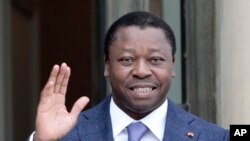
LOME — Togolese President Faure Gnassingbe on Saturday pushed back the African country's legislative and regional elections by a week. The vote will now be held on April 20.
The government had announced the initial April 13 date for the vote in early February, ending months of uncertainty.
The electoral campaigns will run from midnight on April 4 through the end of April 18.
Opposition parties boycotted the last legislative elections in 2018, citing "irregularities" in the electoral lists.
This time, the opposition is preparing to challenge the ruling Union for the Republic (UNIR) party, and organized a voter registration drive.
Gnassingbe came to power in 2005 after the death of his father General Gnassingbe Eyadema, who ran the country with an iron fist for 38 years. He has been re-elected three times in elections the opposition claimed were marred by irregularities.
Two Togolese Journalists Were Targeted by Pegasus Spyware, Media Advocates Say

LAGOS, NIGERIA — Media advocacy group Reporters Without Borders, RSF, on Tuesday said two Togolese journalists who are awaiting trial for "defamation" against a minister were targeted by the Pegasus spy software in 2021.
The two journalists that are awaiting trial, Loic Lawson, the director of the Flambeau des Democrates newspaper, and Anani Sossou, an independent journalist, are known for their critical positions against the regime of President Faure Gnassingbe.
Through a report released Tuesday, RSF said “at least 23 spyware intrusions between 1 February and 10 July 2021 were identified on one of the phones used by Loic Lawson.”
"Freelance journalist Anani Sossou was the target of a similar attack on his phone a few months later, on 25 October 2021," the media advocacy group added.
RSF said the intrusion used Pegasus, a spyware made by Israel's NSO Group. Togo has been accused in the past of using it against dissidents.
The Togolese government did not immediately respond to an AFP request for comment.
RSF said Togolese Communication Minister and government spokesperson Yawa Kouigan did not respond to its request for an explanation of the surveillance operation targeting journalists and the use of such methods in the West African nation.
The media advocacy group began its investigation in December, when the two journalists were released after 18 days of detention for "defamation" against Minister of Urban Planning, Housing and Land Reform Kodjo Adedze.
The journalists had claimed on social networks that the minister had 400 million West African CFA francs ($659,000) stolen from his home.
They then went back on their assertion, saying that "extensive investigations" had shown the amount was overestimated.
But the minister, who had declared a burglary to the police without the amount being made public, filed a complaint against the journalists.
Their trial opened on Jan. 17, but the court declared itself incompetent to judge the case and referred them to the Court of Appeal.
It is not the first time that Togo has been singled out for its use of Pegasus.
In August 2020, an investigation by French daily Le Monde and Britain's The Guardian revealed that Pegasus "sold in the United States by the Israeli company NSO, was used against voices critical of the regime" of Gnassingbe, including opponents, civil society activists and Catholic clerics.
Gnassingbe has been in power since 2005 after succeeding his father, General Gnassingbe Eyadema, who ruled with an iron fist for 38 years.
Forum