



Republic of the Congo
Stampede Kills 37 During Army Recruitment in Brazzaville, Congo
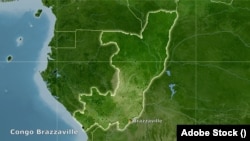
BRAZZAVILLE — Thirty-seven youths were killed in a stampede overnight during an army recruitment drive in a stadium in Brazzaville, the capital of the Republic of Congo, officials said on Tuesday.
Last week, the army in the central African nation also known as Congo-Brazzaville, announced it was recruiting 1,500 people aged between 18 and 25.
Prime Minister Anatole Collinet Makosso said 37 people had been killed in the "tragedy," with an unspecified number of other people injured.
"A crisis unit has been set up under the authority of the prime minister," a statement added.
Would-be recruits had been directed to go to the Michel d'Ornano stadium in the heart of Brazzaville.
According to local residents, many people were still in the stadium on Monday night when the stampede began.
Some people had tried to force their way through gates, with many being trampled in the scramble, residents said.
Details of the event remain hazy and AFP was unable to independently verify the details.
Summit to Protect Rainforests Opens in Brazzaville
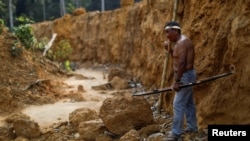
Leaders from countries with the largest tropical forest basins are meeting in the Republic of Congo on Thursday to work together to protect the forests from deforestation and destruction.
Delegates from Brazil, Indonesia, Republic of Congo and dozens of other countries at the Three Basins Summit in Brazzaville are hoping to form a coalition of leaders from the basins of the Amazon, the Congo and Borneo-Mekong in Southeast Asia to discuss how to finance the protection of their wildlife-rich regions, which are also major sites for storing planet-warming carbon dioxide.
The countries in the three basins have 80% of the world’s tropical forests and two-thirds of the Earth’s biodiversity, according to the World Wildlife Fund. But logging, forest degradation, loss of native species and extreme weather events fueled by climate change have the forests under enormous pressure that’s putting local economies and food security at risk.
Despite pledges by governments and businesses to stop forest loss, deforestation continues around the world: A total of 4.1 million hectares of tropical forest was lost to deforestation in 2022, according to a report released Monday by the Forest Declaration Assessment, a group of civil society and research organizations. The vast majority of deforestation in the world – 96% – occurs in tropical regions, the report said.
Agriculture, including cattle ranching and smallholder farming, is the leading driver of forest loss across the tropics, said Fran Price, a global forest practice leader at WWF.
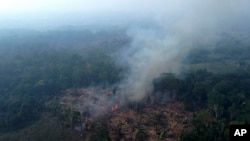
Other causes include road expansion, fires and commercial logging, which also destroy and degrade the forests, she added. Swathes of the Amazon and Indonesian rainforest are regularly up in flames — often started deliberately by those clearing land or burning felled trees — that can sometimes spread uncontrollably.
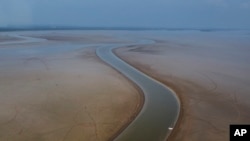
Climate change and other factors have also led to drought and wildfires in forest regions. Just this week, public authorities in Brazil scrambled to deliver food and water across territories around the Amazon river where El Nino and warming are fueling a record drought.
The three basins have experienced different trends over the years. The Amazon, the world’s largest tropical forest basin, saw an 18% increase in forest loss from 2021 to 2022, much of that driven by Brazil – where deforestation has since reduced in the first six months of this year. Forest loss has decreased significantly in Indonesia and Malaysia in recent years and remained relatively consistent in the Congo, according to analysis by the World Resources Institute.
Over the years, countries have announced many initiatives and commitments to ending deforestation, including one at United Nations climate talks in Glasgow in 2021, but implementation has been slow. In August this year, a planned meeting between leaders of Brazil, Indonesia and Congo in Kinshasa to discuss the preservation of tropical forests failed to take place.
Forest experts say the three-day summit in Brazzaville is a critical opportunity to act on and finance plans to protect and restore vital forest ecosystems.
Price wants the summit to go beyond “countries discussing as they have been” and for governments to present concrete and actionable plans that show accountability and transparency.
“It is imperative that all governments in the regions and outside of the regions use this platform to work together,” she said. She also called on the private sector and civil society "to change the business-as-usual trajectory that we’re on.”
Emmanuelle Berenger, sustainable forest management lead at the Rainforest Alliance, said the summit provides a vital chance to translate the multitude of commitments that have been made in the past around preserving and restoring the world’s forests into “initiatives and policies that can genuinely make a difference.”
The summit is an important step in bringing together countries to preserve their forests and improve the livelihoods of people who depend on them, said Mikaela Weisse, director of Global Forest Watch.
“There is no keeping climate change to 1.5° (2.7° F) without protecting tropical forests,” she said, referring to the global goal of capping warming to protect the world from harm caused by climate change.
With the right actions, she added, the summit could help countries build an inclusive coalition where Indigenous Peoples and local voices are valued, and learn from each other on the most effective strategies for ending deforestation.
The gathering is the second Three Basins Summit, building on the first meeting held 12 years ago, when governments and other parties in the basin regions agreed to work together to protect resources.
Congo’s Nguesso Addresses 78th UNGA


The Republic of Congo’s President Denis Sassou Nguesso addresses the 78th session of the United Nations General Assembly in New York.
Forum