



Comoros
Comoros Court Confirms President's Reelection, Opposition Cries Foul
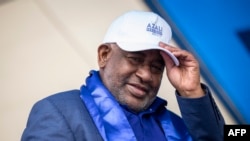
MORONI, COMOROS — The Comoros' supreme court on Wednesday confirmed the reelection of President Azali Assoumani, whose victory in a disputed vote last week was followed by deadly protests.
Rafik Mohamed, president of the court's constitutional and electoral section, said Assoumani had won with 57.2% of the vote, revising the victor's previous score downwards slightly while greatly boosting a strangely low turnout figure.
"There are grounds to declare him elected in the first round," Mohamed told a press conference.
Opposition leaders rejected the results, describing the vote as fraudulent, but the court dismissed as inadmissible lawsuits seeking its annulment.
"We will not endorse fraud," Aboudou Soefo, a defeated opposition challenger, told AFP. "We will mobilize."
Last week, after the vote, the Comoros capital Moroni was paralyzed by two days of running street battles between stone-throwing youths and armed soldiers.
At least one person was fatally wounded, according to medics.
The opposition had pointed to the unexpectedly low 16% turnout figure in the presidential vote initially announced by the electoral commission as evidence that something was amiss.
The figure was far short of that for governor polls the same day.
According to the electoral commission tally, 189,497 Comorans voted to choose governors for each of the three islands in the archipelago, but only 55,258 cast a vote for president.
'Long and tumultuous'
But on Wednesday the supreme court released new figures saying 191,297 people — 56% of registered voters — had cast their ballot in the presidential race.
It was not immediately clear how the adjustment came about.
"Democracy is in mourning, and the peace and stability of the country is seriously affected," said Daoudou Abdallah Mohamed, a former interior minister and a candidate from the Orange opposition party. "I do not recognize these results."
Last Friday, the U.S. embassy in Moroni expressed concern about the results and urged the electoral commission to "clarify" them.
France, which was the islands' colonial power until independence in 1975, also expressed concern, urging "all Comoran actors to favor restraint and dialogue."
Interior Minister Fakridine Mahamoud described the process as "long and tumultuous." "It's normal there was competition," he said after the final tally was announced.
Assoumani, a 65-year-old former military ruler turned civilian president, has dismissed the concerns.
A former army chief-of-staff, Colonel Assoumani initially came to power in a coup in 1999, before handing over to civilians in 2006.
He returned to politics and won reelection in 2016 in a vote marred by violence and allegations of irregularities.
He has since been accused of creeping authoritarianism. His arch-rival ex-President Ahmed Abdallah Sambi was given a life sentence for high treason for allegedly selling passports.
During this year's campaign, Assoumani hailed his government's construction of roads and hospitals.
But in a country where 45% of the population live below the poverty line, plagued by electricity cuts and water shortages, he has faced popular criticism.
Comoros Islands Hope for a Future in Fragrance


One of the main ingredients in perfumes produced and sold around the world comes from the remote Comoros Islands in the Indian Ocean. That ingredient is ylang-ylang, and the people who produce the flower oil are asking for a larger share of the profits. Ruud Elmendorp reports from the Comoros capital, Moroni.
Unrest in Comoros as Opposition Demands Presidential Vote Annulment
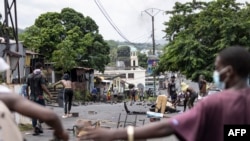
MORONI, COMOROS — Security forces in the Comoros clashed Wednesday with protesters angered by the re-election of President Azali Assoumani, as opposition leaders denounced this week’s vote as fraudulent.
Some demonstrators ransacked a former minister's house and set it on fire, as others tried to block roads in the capital. Police responded with tear gas and arrests, AFP reported.
Election officials said on Tuesday that Assoumani had won 63 percent of the vote in Sunday's ballot, but the five opposition challengers cried foul, alleging ballot-stuffing and inconsistent results.
"Incontestably, these ballots of Sunday January 14, 2024, are invalid. We denounce them and demand their pure and simple annulment," the candidates said, in a joint statement.
Debris, furniture and burning tires were scattered in several streets of the capital Moroni and the Indian Ocean archipelago's largest street market lay deserted in the morning after the disputed poll results were announced.
Tear gas shots echoed through the streets well into the afternoon and black plumes of smoke billowed over the city as police and the army tried to clear roads blockaded by the aggrieved protesters.
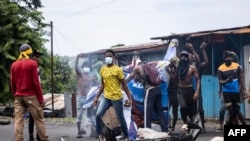
Government spokesman Houmed Msaidie, speaking to AFP, accused the opposition of organizing the protests.
"There have been arrests, but I can't give you the figure for the moment. It's totally normal when there are people out there who want to disturb public order," Msaidie said.
AFP did not say whether the opposition responded to the accusation from the government of being behind the unrest.
There have been no reports of deadly violence, but the Comoros — a three-island chain with a population of about 870,000 — is politically volatile and has seen 20 coups or attempted coups since independence in 1975.
Official results released Tuesday showed Assoumani — a former coup leader turned civilian president — won re-election in the first round.
Ascension to power
A former army chief-of-staff, Colonel Assoumani initially came to power in a coup in 1999, before handing over to civilian rule in 2006.
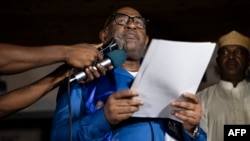
He returned to politics and won re-election in 2016 in a vote marred by violence and allegations of irregularities.
He has since been accused of creeping authoritarianism. His arch-rival ex-president Ahmed Abdallah Sambi was given a life sentence for high treason for allegedly selling passports.
During this year's campaign, Assoumani hailed his government's construction of roads and hospitals.
But in a country where 45 percent of the population live below the poverty line, plagued by electricity cuts and water shortages, he has faced popular criticism.
Comoros' President Extends Rule, Winning a Fourth Term
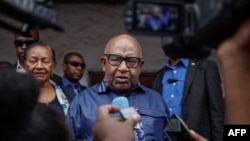
MORONI — Comoros' President Azali Assoumani won a fourth five-year term after being declared by the country's electoral body on Tuesday following Sunday's election in which he contested against five opponents.
Assoumani has been ruling the Indian Ocean archipelago nation since 1999 when he first came to power through a coup.
Since then, he has won three elections. Critics accuse his government of cracking down on dissent, which it denies.
Results published by the national electoral commission late Tuesday showed Assoumani garnered 62.97% of the vote.
The country of about 800,000 people has experienced around 20 coups or attempted coups since winning independence from France in 1975 and is a major source of irregular migration to the nearby French island of Mayotte.
"We can not talk about results because there was no election," Mouigni Baraka Said Soilihi, one of Assoumani's opponents, said after the results were published, adding the election had been tainted by irregularities including closing polls before the legally prescribed time.

On Sunday, other opposition leaders said there were instances of ballot stuffing. They had called for a boycott of the poll, accusing the election commission of favouring the ruling party. The commission denies the charges.
Houmed Msaidie, Assoumani's campaign director, also denied the allegations and asked the accusers to provide evidence.
Comoros President Confident Over Vote Outcome, Opposition Claims Electoral Fraud
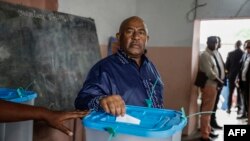
MORONI, COMOROS — Comorans voted in a presidential election Sunday, while incumbent President Azali Assoumani expressed confidence that he will win another term in office and the opposition claimed electoral fraud.
Several Comoran opposition figures had urged voters to boycott the poll, in which five candidates stood against 65-year-old Assoumani for presidency.
"There is confidence that I will win the first round. It is God who will decide and the Comoran people," the president said after voting in his hometown of Mitsoudje, just outside the capital Moroni.
"If I win the first round, it will save time and money," he added.
But the opposition candidates denounced "fraud" and "ballot box stuffing" in several localities, after voting got off to a delayed start.
"As in 2019, we are witnessing an electoral fraud by Azali Assoumani with the army's complicity," Mouigni Baraka Said Soilihi told a news conference, alongside four other opposition candidates.
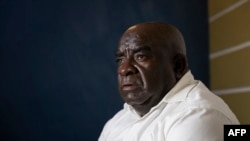
Assoumani — who has jailed some critics and sent others into exile — dismissed reports of irregularities from the opening of the polls, saying he had "not heard about it."
"You need proof," he said, adding that the low turnout was due to bad weather.
The vote count began in the evening after polling stations closed and was under heavy police surveillance. In some instances, counting was done by candlelight as in La Coulee, a northern district of Moroni, AFP noted.
Rapper Cheikh MC, watching the count there, said he was unimpressed by the proceedings.
"For me, these are not elections. We're witnessing a dangerous game that could explode."
Houmed Msaidie, the president's campaign manager, denied any electoral fraud, accusing the opposition of being "petty and conspiratorial."
Full results of Sunday's vote are expected to be published during the week.
Earlier in the rain-drenched capital, several polling stations faced delays and opened after the scheduled 7:00 am (0400 GMT) start.
"The stations often begin late," an African Union observer told AFP.
Assoumani, in power since 2016, extended his time in office through a controversial constitutional referendum in 2018 that removed presidential term limits.
The president's arch-rival and highly popular predecessor, Ahmed Abdallah Sambi, was handed a life sentence in November 2022 on charges of high treason.
Suspicions of election fraud emerged due to the late publication of voting lists, with opposition leaders saying many people were left unsure where they were supposed to vote.
"We are challenging the improper nomination of voting station staffers, who are all supporters of the ruling party," Latuf Abdou of the opposition Juwa Party said.
Juwa's Djaffar El Mansoib said opposition observers had been "prevented from accessing the polling stations in Anjouan," their traditional stronghold.
Security was beefed up for voting day, and some civil society groups said they were deploying observers at voting stations to "protect" the ballot.

Nearly 340,000 people were eligible to vote in the predominantly Muslim nation, which declared independence from France in 1975. According to World Bank figures, 45 percent of the population of roughly 900,000 lives below the poverty line.
Outright protests are rare on the country's three islands, and Assoumani's supporters are hoping for a repeat of the 2019 ballot, when he was elected in the first round with 60% of the vote.
If no presidential candidate wins outright, a second round is set for February 25.
"There are countries where people are born and die without seeing an election," said Assnawi Mohamed, a 41-year-old technician. "We are lucky to have elections."
An estimated 300,000 Comorans have emigrated to France but once again they were not allowed to vote in the presidential contest, despite the promises of the authorities.
Remittances from the diaspora accounted for over 20% of the archipelago's GDP in 2022, according to the World Bank.
Assoumani first came to power in a coup d'etat in 1999, returning to power in 2016 elections. In recent months, he has made a series of promises, pledging better roads and hospitals, for example.
Forum