



Mali
Morocco pushes to bring Central Sahel ‘out of isolation’
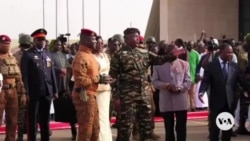

In a November interview, Morocco's foreign minister said his country plans to bring Central Sahel countries such as Burkina Faso, Niger and Mali "out of isolation" with a joint development and port access package known as The Atlantic Initiative. As they battle militants linked to terror groups, Central Sahel countries have turned away from regional and international partners, so what can their neighbors do to reach out to them? Henry Wilkins reports.
VOA 60: Mozambique police patrol Maputo in wake of election dispute violence, and more
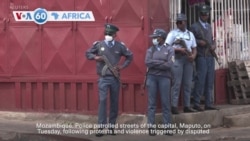
Mozambican police patrolled streets of the capital, Maputo, on Tuesday, following protests and violence triggered by disputed election results. The U.S. government on Monday condemned the weekend killings by gunmen of two opposition figures, with Washington urging "a swift and thorough investigation into the murders." Taiwan has again rejected South Africa’s demand to move its representative office from the country's capital, Pretoria, to the commercial center of Johannesburg, Foreign Ministry spokesperson Jeff Liu said Tuesday. He blamed pressure from Beijing for the decision. These, and more Africa-related news updates on today’s VOA 60.
Sahel juntas write to UN over alleged Ukraine rebel support
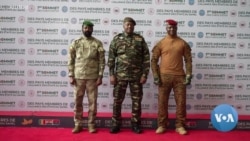
Burkina Faso, Mali and Niger have urged the U.N. Security Council to "take responsibility" for Ukraine's alleged support of rebels, following an attack in July in which Malian soldiers and mercenaries from Russia's Wagner group were killed. Reuters’ David Doyle has more.
Wagner Group fighters suffer heaviest loss in Africa during fighting in late July

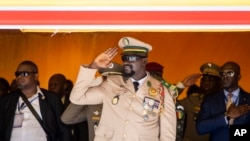
An international NGO helps people in Mali and Burkina Faso to become economically successful
African Union Urges Mali to Provide Post-Coup Transition 'Roadmap'
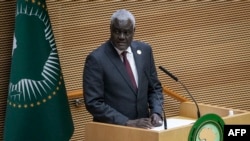
NAIROBI — The African Union on Saturday urged Mali to provide a post-coup transition “roadmap,” saying the move was needed to steer the country back to democratic rule.
Earlier this week Mali's military junta ordered the suspension of all political activities — citing a need to maintain public order — and the African Union expressed "grave concern" at the move, saying it was likely to hinder the return to democracy.
Prime Minister Choguel Kokalla Maiga, appointed by the military colonels who overthrew President Ibrahim Boubacar Keita in August 2020, said Thursday evening that elections will only be held once the country, which is facing a serious security crisis, has stabilized.
Mali's leaders have faced domestic and international criticism raised since the military failed to meet its commitments to hold the presidential election in February and then to step down.
On Thursday, the junta also banned media coverage of political parties, as the colonels extended their crackdown on dissent in the West African nation.
In a statement, AU chairman Moussa Faki Mahamat expressed "grave concern" at the latest developments, saying he was "calling on the authorities to reconsider this decision and work on a road map aiming at completing the ongoing transition process."
He warned that suspending parties and political associations threatened to "hinder the implementation of an inclusive transition process in the country."
The AU head underlined "the Organization's willingness to work with the transitional authorities and all Malian stakeholders to restore constitutional order, within the prescribed time frame, with a view to promoting lasting peace, stability and development in Mali."
The organization suspended Mali in June 2021.
Mali has since 2012 has been plagued by rising Islamic extremism amid a serious security, political and humanitarian crisis.
Since taking power, the junta has undertaken a strategic reorientation, breaking off its long alliance with former colonial power France and fostering closer military and political ties with Russia.
Under pressure from regional bloc ECOWAS, the junta had promised to hold elections and hand power back to civilians by March 26, but no vote was organized.
The United Nations on Thursday voiced alarm at the junta's move to suspend political activities, with the U.S. State Department echoing the criticism and calling for elections.
The junta last year ordered the withdrawal of the U.N. stabilization mission MINUSMA and in January ended a 2015 peace agreement with separatist groups in the north.
Neighboring Sahel states Burkina Faso and Niger also underwent military coups in 2022 and 2023 respectively.
The three countries have all pledged to leave ECOWAS in favor of their own Sahel alliance.
Mali Parties Reject Junta’s Suspension of Political Activities
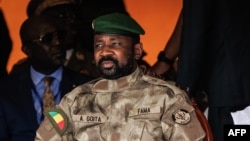
BAMAKO — Malian political parties and civil society groups on Thursday jointly rejected the governing military junta's order to suspend political activities and vowed to mount a legal challenge to what one opposition politician called the "dictatorial" move.
Mali has been under military rule since a coup in 2020. Tensions in the West African nation have risen in recent weeks, leading major parties and other organizations jointly to call out the junta on March 31 for not scheduling elections within the promised time frame.
The authorities issued a decree on Wednesday suspending until further notice all activities by political parties and groups on the grounds of maintaining public order.
Joining forces again, the parties and civil society groups said they were astonished by the decision and called it a "serious violation ... of democratic freedoms."
The signatories to the declaration said they rejected the decree and would challenge it in court and refuse to participate in any government activity, including ongoing national talks.
They "will resist and will triumph," the declaration said.
Earlier on Thursday, the authorities doubled down on the decree, ordering television, print and other media in Mali to stop broadcasting or publishing reports on the activities of political parties and groups.
"This decree has surprised and shocked all republicans," said Boubacar Toure, vice-president of the Rally for Mali (RPM) party of ousted president Ibrahim Boubacar Keita.
Toure said he thought the Constitutional Court should rule on the issue, but others called for more direct action.
In an online post titled "DICTATORIAL DRIFT," senior opposition politician Housseini Guindo said it was time for "our people ... to resist this ignominy and initiate civil disobedience until the fall of the illegal and illegitimate regime."
Mali's current junta seized power in a second coup in 2021 and later promised to restore civilian rule by March 2024 following elections in February of this year.
However, the authorities said last September they would indefinitely postpone the February elections for technical reasons, deepening concerns about democratic backsliding in West and Central Africa, where there have been eight coups over the past four years.
"We call on Mali's transition government to honor its commitments to its citizens and hold free and fair elections," U.S. State Department spokesperson Matthew Miller said on Thursday, expressing deep concern about the suspension of political activities.
Mali Bans Media Coverage of Political Parties After ‘Suspending’ Political Activities
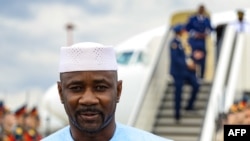
BAMAKO — Mali's ruling military junta on Thursday banned media coverage of political parties a day after suspending their activities, marking the latest crackdown on dissent in the West African nation.
Opposition voices have been largely stifled since the colonels seized power in a 2020 coup, overthrowing civilian president Ibrahim Boubacar Keita.
Mali's high authority for communication issued a statement Thursday calling on "all media (radio, television, written press and online) to halt broadcast and publication of the activities of political parties and the activities of a political nature of associations."
The statement did not indicate what would happen to media organizations that did not observe the ban, AFP said.
The move comes after authorities on Wednesday ordered the indefinite suspension of all political activities, saying it was needed to maintain public order.
Government spokesman Colonel Abdoulaye Maiga blamed the suspension of party activities on the "sterile discussions" during an attempt at national dialogue earlier this year.
"Subversive acts by political parties are multiplying," a decree read out to reporters by Maiga said.
He added that the fight against armed jihadist and Tuareg separatist groups could not be reconciled by "sterile political debates."
The latest crackdown has prompted numerous comments on social media but there has so far been little reaction from parties or leading figures, already largely silenced.
Moussa Mara, who was prime minister from 2014 until 2015, urged authorities to reverse the decision, calling it a "major step backwards" that "does not promise a peaceful future."
The president of the Convergence for the Development of Mali (CODEM) party, Housseini Amion Guindo, called for "civil disobedience until the fall of the illegal and illegitimate regime... due in particular to its inability to satisfy the essential needs of Malians."
Under pressure from regional bloc, the Economic Community of West African States (ECOWAS), the junta had promised to hold elections and hand power back to civilians by March 26, 2024, but no vote was organized.
The United Nations voiced alarm Thursday at the junta's move to suspend political activities.
"We are deeply concerned by the decree suspending the activities of political parties and other civic associations," the UN rights office said on X, formerly Twitter, insisting that "it must be immediately repealed."
'Return to the barracks'
Since August 2020, Mali's opposition has been largely muzzled by legal woes, the dissolution of organizations, restrictions on press freedom and calls for national unity.
But in a rare joint statement on March 31, a number of political parties and civil groups decried the "legal and institutional vacuum" left by the failure to hand back power to civilians on March 26.
They called for a "rapid and inclusive dialogue" to ensure that the presidential election is held "as soon as possible."
In a separate statement on the same day, a group of human rights organizations said that Mali had "reached an impasse" and that it was time for the military "to return to the barracks."
Since seizing power in 2020, the junta has ended several international alliances, including with the European Union and former colonial power France, and instead fostered closer ties with Russia.
The military government last year ordered the withdrawal of the UN stabilization mission, MINUSMA, and in January ended a 2015 peace agreement with separatist groups in the north.
The worsening security situation in Mali has also been compounded by a humanitarian and political crisis.
Neighboring Sahelian states Burkina Faso and Niger also underwent military coups in 2022 and 2023 respectively.
The three countries have all pledged to leave ECOWAS in favor of their own Sahel alliance.
Mali Political Parties Call for Elections, Junta Shuns Transition Promise
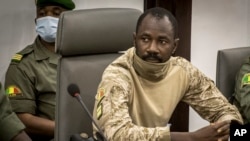
BAMAKO — Malian political parties have requested a time frame for presidential elections after the ruling junta failed to organize polls within a promised 24-month transitional period back to democracy.
Mali has been under military governance since August 2020, the first of eight coups in West and Central Africa over four years, including in its neighbors Burkina Faso and Niger.
Regional blocs have been trying to negotiate transitions, but the military juntas are dragging their feet.
Mali's current leadership seized power in a second 2021 coup and later promised to take 24 months from March 2022 to restore civilian rule.
The start date for the transitional period was March 26, 2024, and elections were to be held in February.
The West African nation passed a new electoral law in June 2022, but said in September last year that it would postpone the elections slated for February for technical reasons, sparking outrage among political groups.
Many reacted again after last month's transition deadline lapsed without a vote.
In a joint statement late on Sunday, some of Mali's main political parties and civil society groups called on authorities to set up an institutional framework for polls as soon as possible.
"We will use all legal and legitimate avenues for the return of normal constitutional order in our country," they said in the statement, which has over 20 signatories, including a major opposition coalition and the toppled ex-president's party.
The junta has not reacted.
Mali's military leaders already failed on a first promise to hold elections in February 2022, prompting stiff sanctions from the Economic Community of West African States, ECOWAS.
ECOWAS, West Africa's main political and economic body, eventually lifted Mali’s sanctions after the new electoral law was published.
Junta-led Chad is meanwhile scheduled to hold the first round of a presidential election next month in what would be the first of the region's military governments to restore constitutional rule.
Russia Discusses ‘Bilateral Issues’ with Mali and Niger Junta Leaders
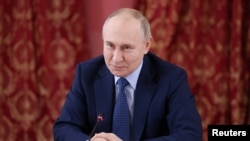
BAMAKO, MALI — Russian President Vladimir Putin on Wednesday discussed security and economic cooperation with Mali's junta leader Assimi Goita by phone, both countries said.
The discussion between Putin and Goita was held a day after the Russian leader spoke with General Abdourahamane Tiani, the leader of Niger’s governing military junta.
"We discussed bilateral issues, particularly the security and economic areas," Goita wrote on X, adding, "we agreed to cooperate further in the fight against terrorism."
The Kremlin confirmed the call and said the two leaders agreed to forge closer ties.
Mali has in recent years become one of Russia's closest African allies, with the Wagner Group mercenary force deploying in the West African nation to fight jihadist insurgencies rebels in the region.
Russia is seeking to strengthen relations with African countries, pitching Moscow as a friendly country without a colonial background in Africa.
The call appeared to be part of a round of diplomatic exchanges Putin has made with West and Central African leaders since his re-election earlier this month.
The Kremlin said on Wednesday, Putin and the leader of the Republic of Congo Denis Sassou Nguesso, had agreed in a phone call to deepen political, economic, and humanitarian ties.
On Tuesday, Putin spoke by phone with Col. Tiani and discussed a need to reinforce their security cooperation, according to Nigerien state television.
The call followed a decision on March 17 by Niger, a former Western ally in the fight against militant insurgencies in the Sahel region, to revoke its military accord with the United States.
U.S. officials had warned Niger’s junta leaders about their ties with Russia and Iran, days before the military agreement was revoked.
The decision by Niger’s governing junta followed that of neighboring Mali and Burkina Faso who have also severed military ties with longstanding allies including France while turning to Russia for support.
The three have also decided to quit the 15-member West African regional bloc and formed a cooperation pact known as the Alliance of Sahel States, AES.
The Sahel states, which are fighting Islamist insurgencies, agreed earlier this month to set up a joint force to tackle security threats across their territories.
Mali Freezes Assets of Separatists, Islamic Militant Leaders
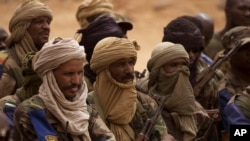
BAMAKO—Mali's ruling junta has imposed financial sanctions on two jihadist leaders and four heads of the Tuareg separatist rebellion, according to a document seen by AFP on Wednesday.
The six men, who have a long history of armed involvement against the Malian state, were all accused of "acts of terrorism," "financing terrorism," "undermining territorial integrity," and "criminal conspiracy."
They were already on a list of people targeted in an investigation by the Malian judiciary on the same grounds announced at the end of November.
A statement from the economy ministry dated March 8 froze for a minimum of six months "the assets and economic resources" of Iyad Ag Ghali, head of the al-Qaida-linked coalition Support Group for Islam and Muslims (GSIM), and Amadou Kouffa, leader of the Katiba Macina, another al-Qaida-affiliated group.
Four other men, who are leaders of the Tuareg separatist rebellion that took up arms against the Malian state last year, were targeted by sanctions.
Alghabass Ag Intalla, Bilal Ag Acherif, Fahad Ag Almahmoud and Achafagui Ag Bouhada were also described as members or allies of the GSIM.
The practical implications of freezing their assets are unclear.
Mali has since 2012 been ravaged by different groups affiliated to al-Qaida and the Islamic State group, as well as by self-declared self-defense forces and bandits.
The country has been under military rule since back to back coups in 2020 and 2021, with the security situation compounded by a profound humanitarian and political crisis.
The Tuareg-dominated separatists, who signed a peace agreement in 2015, resumed hostilities in the north last year.
At Least 31 Killed in Mali Bus Accident, Transport Ministry Says

BAMAKO — At least 31 people were killed in Mali on Tuesday when a bus plunged off a bridge over a river near the western town of Kenieba, the transport ministry said.
The bus was en route to Burkina Faso when the accident occurred at around 1700 local time, the ministry said, adding Malians and citizens of elsewhere in the West African subregion were among the victims.
The ministry said, "the probable cause was the driver's failure to control the vehicle."
Road accidents are more frequent in West Africa, where public transport is often overloaded and poorly regulated.
Africa accounts for approximately one quarter of the world's traffic deaths even though the continent has barely 2% of the world’s vehicle fleet, according to U.N. data released in 2023.
Italians Kidnapped by Militants in 2022 Freed in Mali, Government Says
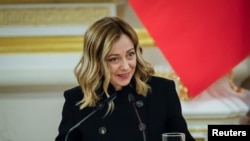
ROME — An Italian couple and their son, who were kidnapped in 2022 by an Islamist militant group in Mali, were freed late on Monday, the Italian government said.
Rocco Langone, Maria Donata Caivano and Giovanni Langone had been living in a Jehovah's Witnesses community in the southern city of Koutiala when they were seized by a jihadist group allied with al-Qaida militants.
The government said their release had been secured by the Italian intelligence agency AISE and the foreign ministry, thanks to their contacts with tribal representatives and Malian intelligence. It gave no further information.
"Despite their long imprisonment, the members of the Langone family are in good health," the government said, adding that they were due to return to Rome on Tuesday.
The couple were in their 70s and their son was in his 50s at the time of their abduction, a spokesman for the Jehovah's Witnesses church said in 2022.
Mali has struggled to contain a decade-old battle with Islamist insurgents that has destabilized the region, with militants using the country as a launch pad for attacks across West Africa's Sahel region and into its coastal neighbors.
Mali Bans French Channel for Four Months
DAKAR, SENEGAL — Mali’s governing junta has ordered the removal of television channel France 2 from broadcasting packages for four months over a story on the security situation, according to official documents seen by AFP on Thursday.
The move is the latest by the ruling junta to shun former colonial power France after seizing power in a military coup.
Mali’s High Authority for Communication, HAC criticized a report broadcast on France 2's evening news in January for "glorifying terrorism" by contrasting "the firepower of armed terrorist groups" with that of the Malian army.
The communications authority accused France 2 of retroactively "justifying" the presence of the French anti-jihadist Barkhane force that operated in Mali until 2022.
The France Televisions group provided no immediate reaction when contacted by AFP.
French troops withdrew amid deteriorating relations between Bamako and Paris following military coups in 2020 and 2021.
Mali’s junta has since chosen to pivot towards Russia, both politically and militarily.
In a document sent to broadcasters, the HAC also cited "serious breaches" of journalistic ethics aimed at "demoralizing the troops and the population."
In 2022, Mali’s military leaders suspended the widely-followed French networks France 24 and Radio France Internationale. Correspondents from several foreign media were forced to leave, go into exile or suspend work.
Military regimes also seized power in neighboring Burkina Faso and Niger in 2022 and 2023 respectively, with both introducing measures against the press.
Reporters Without Borders, RSF said in a 2023 report that the Sahel region was in the process of becoming a "no-news zone."
Forum