



Zimbabwe
Zimbabwe is applying to join BRICS, foreign minister announces on Moscow visit
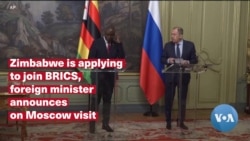

More African countries are signing up to join BRICS, a consortium of nations comprising Brazil, Russia, India, China and South Africa. On Thursday, Zimbabwe’s foreign minister Amon Murwira, on a visit to Moscow, said Harare is submitting an application to join the group. BRICS has been seeking to expand its membership to deepen economic ties. Last year, Egypt and Ethiopia, became two African states admitted into the group at a BRICS summit in the Russia city of Kazan. The others included Iran, Saudi Arabia and the United Arab Emirates (UAE). In January, Brazil, which holds the bloc's presidency in 2025, said it has admitted Nigeria as a “partner country” in the multinational bloc of nations. "As the 6th largest population in the world and the 1st on the African continent, as well as one of the largest economies in Africa, Nigeria has converging interests with the other members of the group," Brazil Foreign Ministry, known as Itamaraty, said in the statement.
Zimbabwean journalists find ways to create level playing field for each other

In an attempt to end polarization in Zimbabwe's media, an organization is hosting sports events for journalists from the privately owned and state-run media. Columbus Mavhunga joins the inaugural event in Harare, where he files this report.
Zimbabwe urged to put money into cancer treatment services
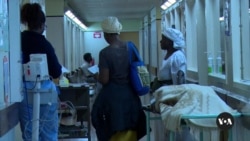
Cancer patients and advocates are urging authorities in Zimbabwe to ensure cancer centers have lifesaving equipment needed to properly treat patients. Some patients say public hospitals do not have working machines to provide radiotherapy. Columbus Mavhunga has more from Harare.
Zimbabwean comedian wows audiences on America's Got Talent

Zimbabwe doesn’t have a thriving standup comedy scene tradition. But when Learnmore Jonasi was exposed to the art form in his native Zimbabwe, he knew that making people laugh was what he wanted to do. VOA reporter Keith Baptist caught up with him in Harare and has this story.

Zimbabwean car manufacturer strives to create vehicles made in Africa

Originally from Zimbabwe, 36-year-old Tatenda Mungofa is the co-founder of a car manufacturing company headquartered in South Africa. His company strives to create vehicles made in Africa. Reporter Keith Baptist has this interview with the young entrepreneur.
Mozambican president Nyusi opens Zimbabwe agriculture show in Harare
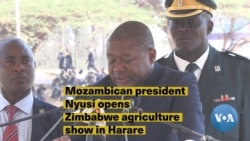
Mozambican president Filipe Nyusi on Tuesday joined his Zimbabwean counterpart Emmerson Mnangagwa to officially open the Zimbabwe agricultural show in Harare. Nyusi called on Zimbabweans to invest in his country while expressing gratitude to the Zimbabwean leader and his people for their support to fight against terrorism in the north of Mozambique’s Cabo Delgado Province. “I am proud of what we have achieved together,” Nyusi said. Mnangagwa later told the press in an interview that President Nyusi is in his country to also see how Zimbabweans have been working to ensure food security. “He (Filipe Nyusi) admired what our people are doing in agriculture,” he said.
Canadian hopes to ease cash crisis in Zimbabwe with an accounting software

Zimbabwe has been grappling with currency issues for many years, with valueless notes ranging from 1 million to 100 billion, and the country has gone through six different currencies since 2009. However, Canadian entrepreneur Ryan Luke Watson believes he may have found a solution with an accounting software. Reporter Keith Baptist has this story from Harare, Zimbabwe.
Civil society and human rights groups in Zimbabwe share concerns for the SADC summit
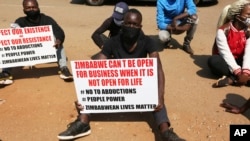
Zimbabwe to host Southern African Development Community summit

Zimbabwe is hosting the annual summit of the 16-nation Southern African Development Community, or SADC, on Saturday. Human rights organizations have called on SADC to look at the country's human rights situation. Columbus Mavhunga reports for VOA from Harare.
US hip-hop exchange program hopes to electrify Zimbabwe's music scene

In celebration of hip-hop's 51st anniversary this August, the U.S. Embassy in Zimbabwe is hosting a cross-cultural exchange program called “Next Level,” featuring five artist-educators. Reporter Keith Baptist has the story from Harare.
Zimbabwe has not been invited to a US-Africa military conference in Botswana

Zimbabwe announces fining businesses for not using official exchange rate
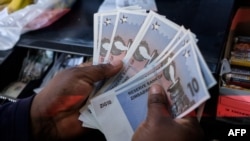
Zimbabwe will fine businesses using inflated exchange rates as the government battles to maintain the value of its newly introduced gold-backed currency, the Zimbabwe Gold, ZiG.
Any business using an exchange rate other than the official rate of 13.5 ZiG per U.S. dollar will be liable for a fine of 200,000 ZiG ($14,815), according to a government notice seen by Reuters news.
Anyone offering "goods or services at an exchange rate above the prevailing interbank foreign currency selling rate" would be guilty of a civil infringement, read the notice, issued late on Thursday.
Zimbabwean authorities have been making efforts to keep the ZiG afloat since its introduction in early April, with President Emmerson Mnangagwa's administration launching a blitz on illegal foreign currency traders last month.
Some businesses such as supermarkets have been charging a premium above the market rate for customers paying in the new currency, while the ZiG is being rejected by informal traders.
Zimbabwe's Treasury on Tuesday moved to enforce the use of the ZiG as the official unit of exchange for transactions.
Inflation rates in Zimbabwe were at 57 percent following the introduction of the new currency.
Professor Gift Mugano, the director for African Governance and Development at South Africa’s Durban University of Technology, says Zimbabwe's new currency alone could not address the nation’s economic woes.
Zimbabwe's problems will be addressed when its economic output increases, allowing it to earn foreign currency and create demand for the ZiG, Mugano said.
Despite Mugano's skepticism, some Zimbabweans remained optimistic that the new currency would help the nation return to its status of being the "breadbasket of southern Africa."
Philip Manyonganise, a Zimbabwean who spoke to media while in a queue outside a bank to withdraw the ZiG, said the new currency "has value" in comparison "to the past currency," in reference to the Zimdollar.
The introduction of the ZiG marked Zimbabwe's fourth attempt at having a local currency within a decade. The southern African nation dumped the Zimdollar last month after it lost 70% value since the start of the year.
Some information from this article was sourced from Reuters and Agence France-Presse.

Forum